


Exploring Petra
City of Mysteries
A Journey into the
City of Mysteries
Carved into rose-red sandstone cliffs over two millennia ago by the Nabataeans, Petra is one of the world’s greatest archaeological wonders. Plan your journey through the Siq, the iconic Treasury, and the majestic Monastery with local Bedouin expertise.
Wander through the towering Siq to behold the iconic Treasury, marvel at the ancient Roman Theater and Royal Tombs, and hike up to the monumental Monastery for panoramic vistas. Every carved facade reveals the extraordinary wonders and mystery of the rose-red city.
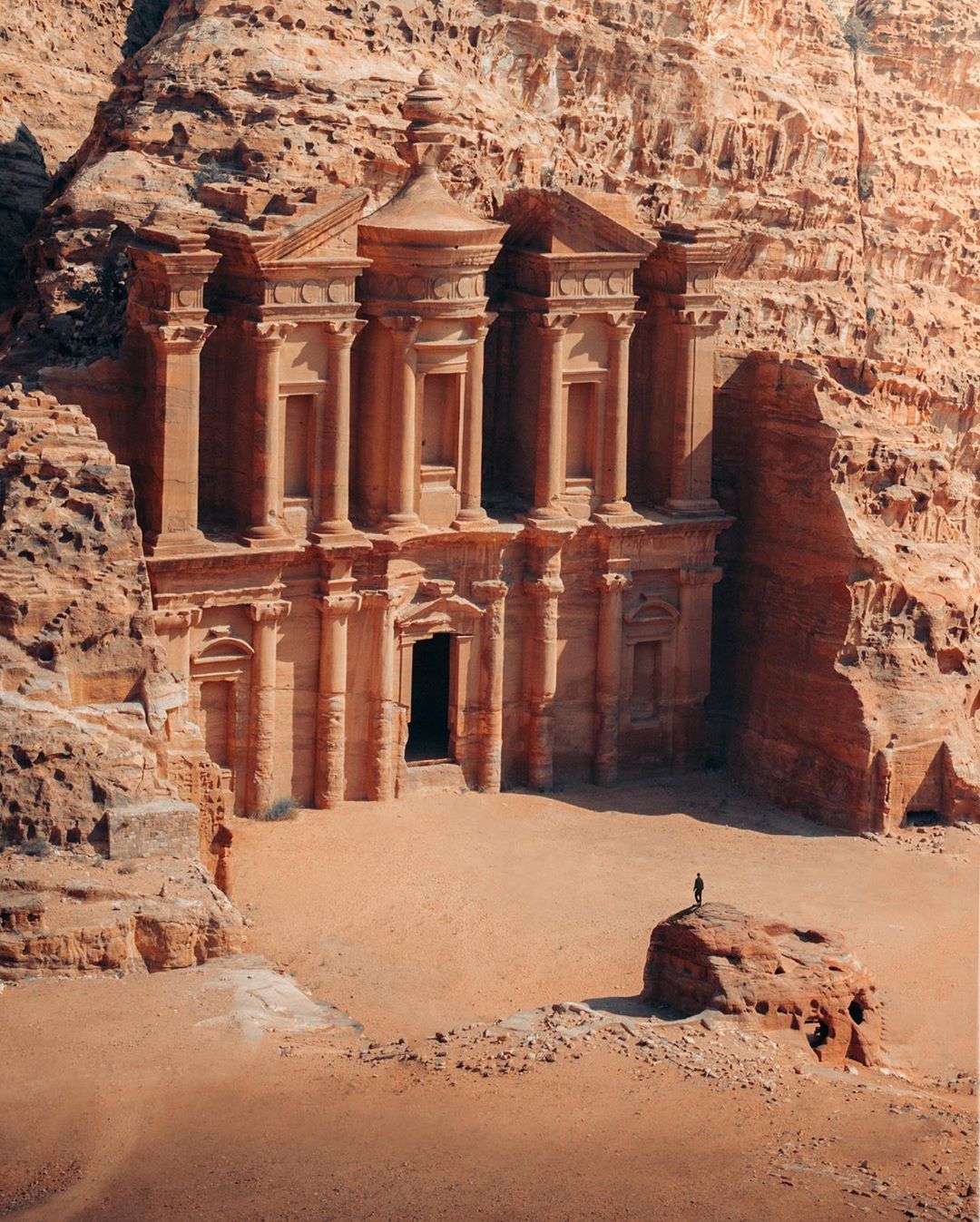
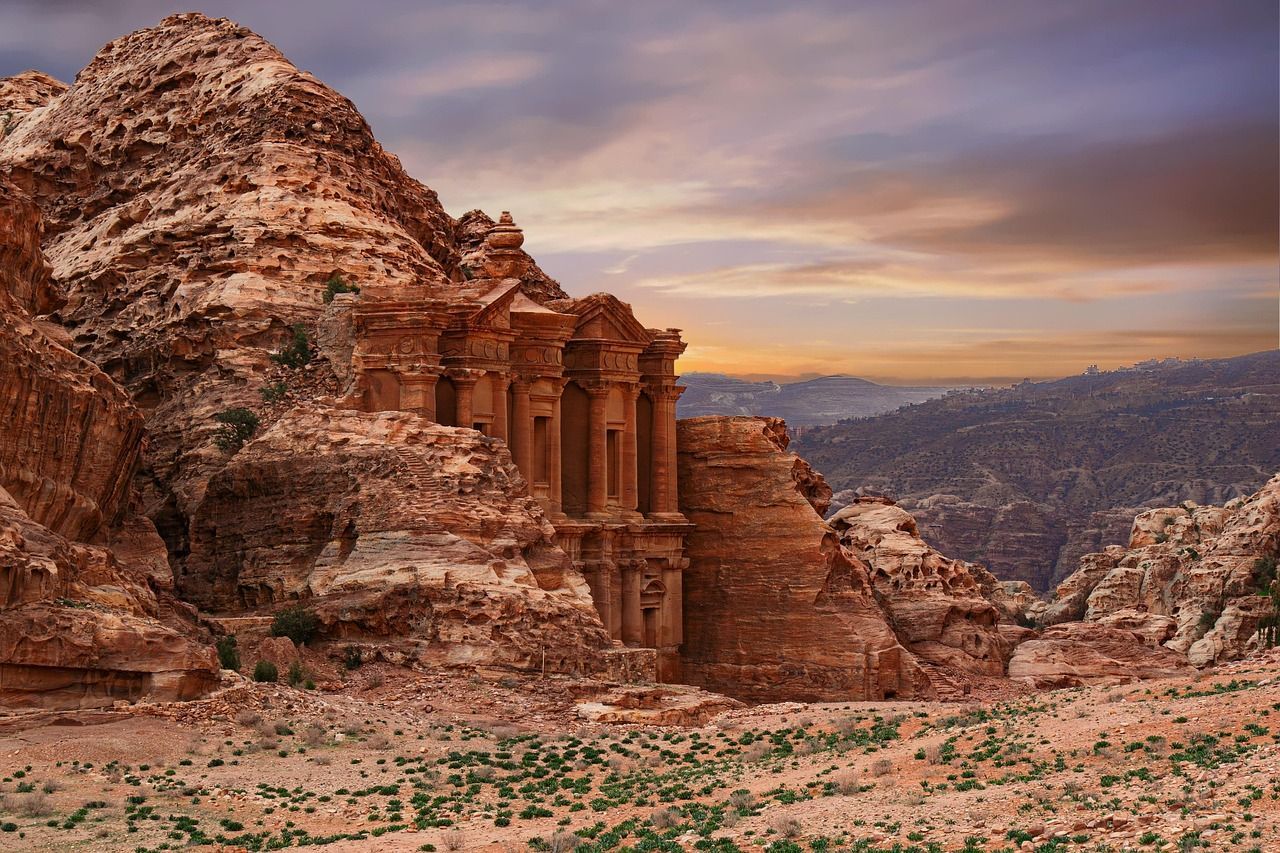
Ad-Deir: Petra’s Mountain Sanctuary
The Monastery, known as "Ad-Deir" in Arabic, is one of the largest monuments in Petra. Measuring 47 meters wide by 48.3 meters high, it was modeled after the Khazna but features niches for sculptures instead of bas-reliefs.
The façade includes a columned portico, and the interior has two side benches and an altar against the rear wall. Initially used as a biclinium for religious meetings, it dates back to the early 2nd century AD during the reign of King Rabel II. Later, the hall was repurposed as a Christian chapel, with crosses carved into the rear wall, which led to its name "Monastery."
The High Place of Sacrifice
Perched atop Jebel Madbah Mountain at an elevation of 170 meters above the valley floor, the High Place of Sacrifice (al-Madhbah) was one of the most sacred ritual sites of the Nabataean kingdom. Carved directly into the summit's bedrock, the open-air sanctuary features ceremonial altars, rock basins, and drainage channels once dedicated to animal offerings for the chief god Dushara.
The ascent follows a winding ancient stone stairway through quiet mountain ridges, passing monumental rock obelisks along the path. Upon reaching the windswept summit, hikers are rewarded with an unmatched 360-degree panoramic view overlooking the ancient city basin, the Royal Tombs, and the rugged peaks stretching toward the desert horizon.
How to Experience Petra in One Day
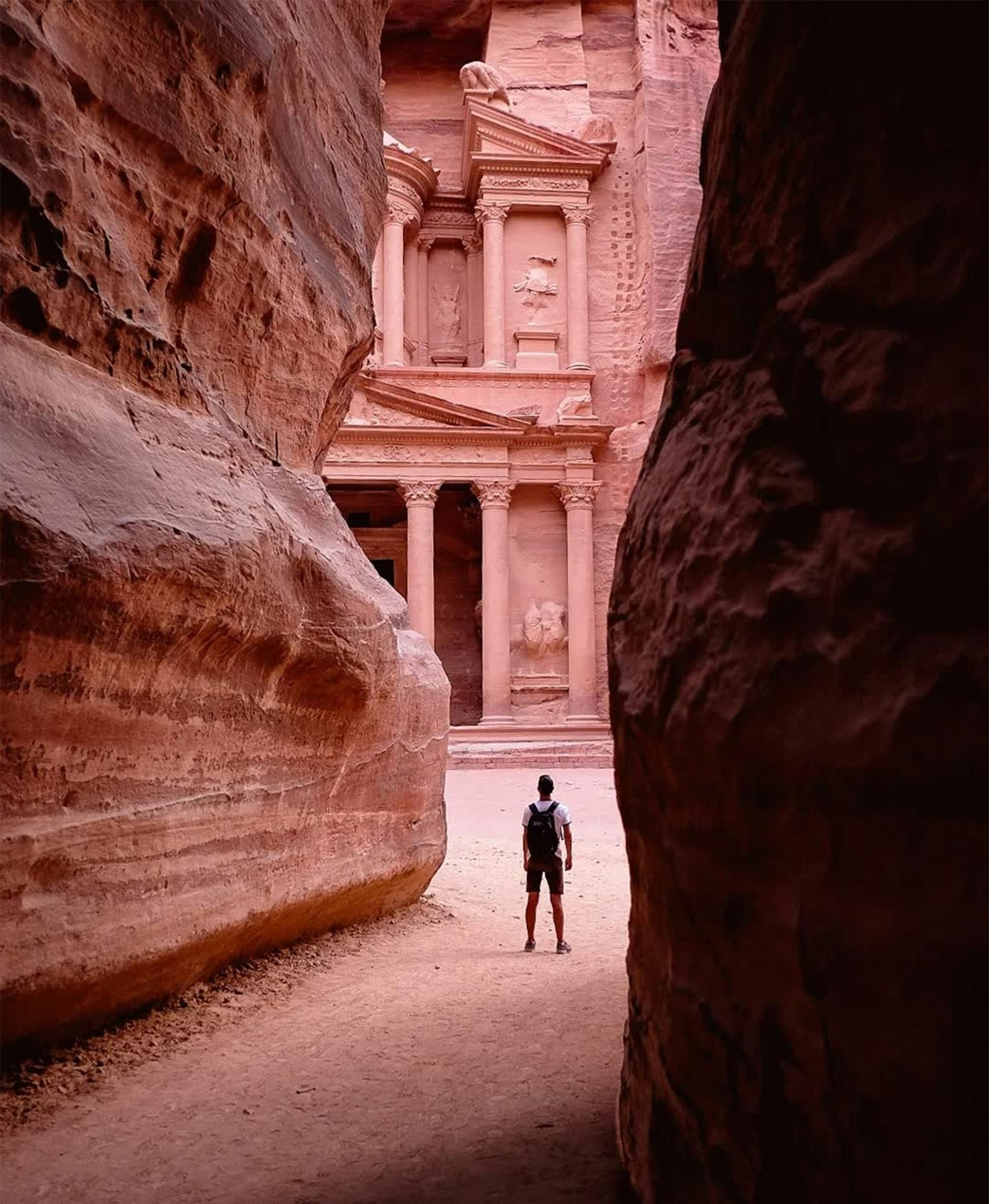
Morning (06:30 – 10:30): Walk through the dramatic Siq as the morning sun illuminates the canyon, reaching the Treasury before the crowds. Continue along the Street of Facades toward the Roman Theater and explore the royal facades.
Midday (10:30 – 13:00): Walk down the ancient Colonnaded Street toward Qasr al-Bint. Take a well-deserved break for lunch or relax with authentic Bedouin mint tea.
Afternoon (13:00 – 16:30): Ascend the ancient 800 stone steps to the breathtaking Monastery (Ad-Deir). Relax at the cliffside Bedouin viewpoint looking across the desert valleys before beginning your return hike.
Evening: Return to Wadi Musa for dinner or experience Petra by Night illuminated by more than 1,500 candles.
Who Are the Nabataeans?
The Nabataeans were an industrious Arab people who settled the area more than 2,000 years ago.
Petra was widely admired across the ancient world for its refined culture, monumental architecture, and ingenious network of dams and water cisterns. Serving as the vital crossroads of the Incense and Silk trade routes, it brought together riches from across continents. T.E. Lawrence journeyed here before and during the Arab Revolt, captivated by the majestic rock-hewn temples and tombs. Today, Petra is recognized as a UNESCO World Heritage Site and one of the New Seven Wonders of the World.
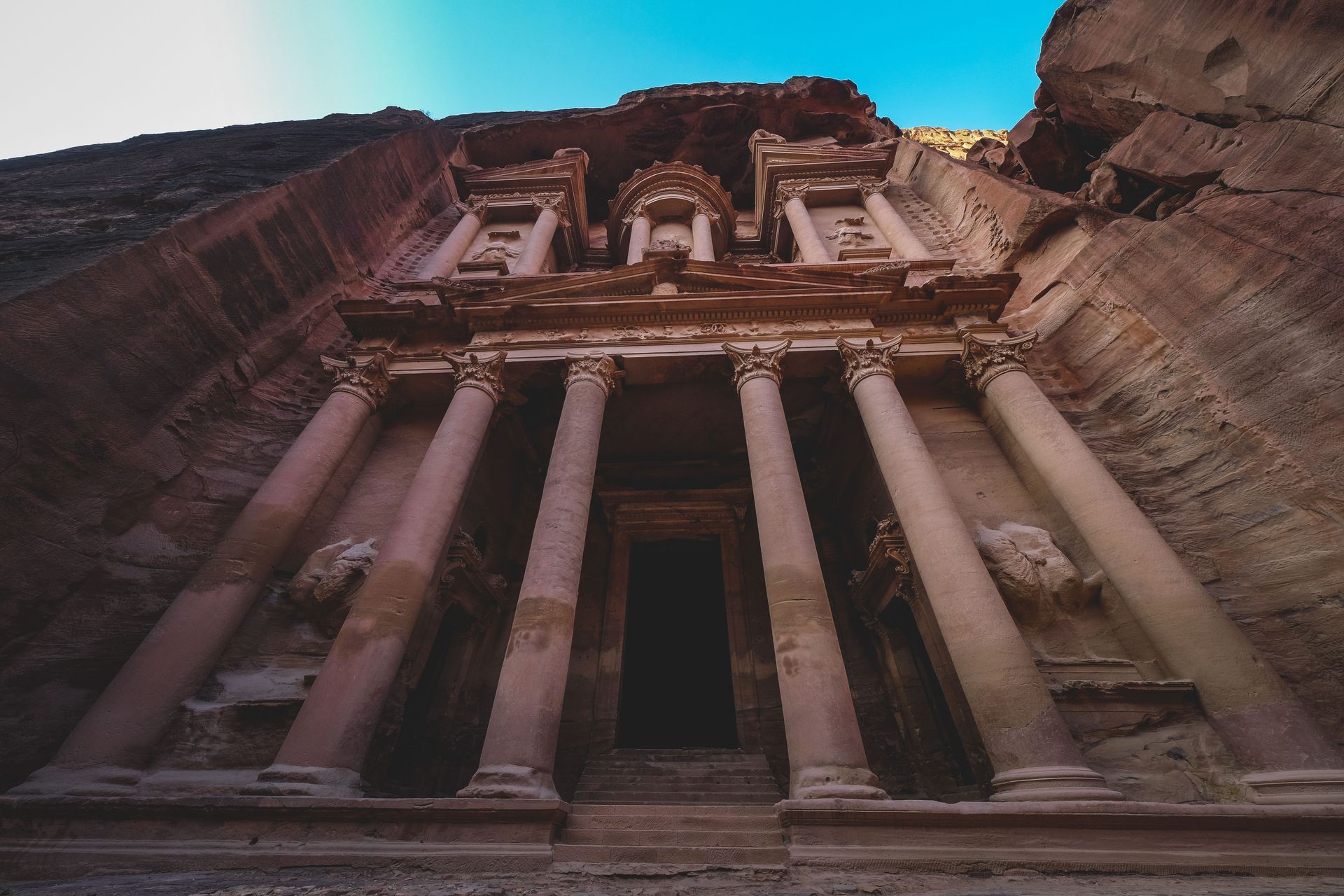
Walking through the towering sandstone walls of the Siq leads you to the iconic Treasury (Al-Khazneh). From there, explore the wonders of ancient Petra, including the majestic Royal Tombs and the rock-carved 8,000-seat Roman Theater.