

Wadi Rum
Valley of the Moon
Welcome to the
Valley off the Moon
Nestled in the heart of southern Jordan, Wadi Rum, also known as the Valley of the Moon, offers an otherworldly landscape of stark beauty and timeless allure. This protected area is not only a natural wonder but also a cultural and historical beacon that has drawn humans for thousands of years.
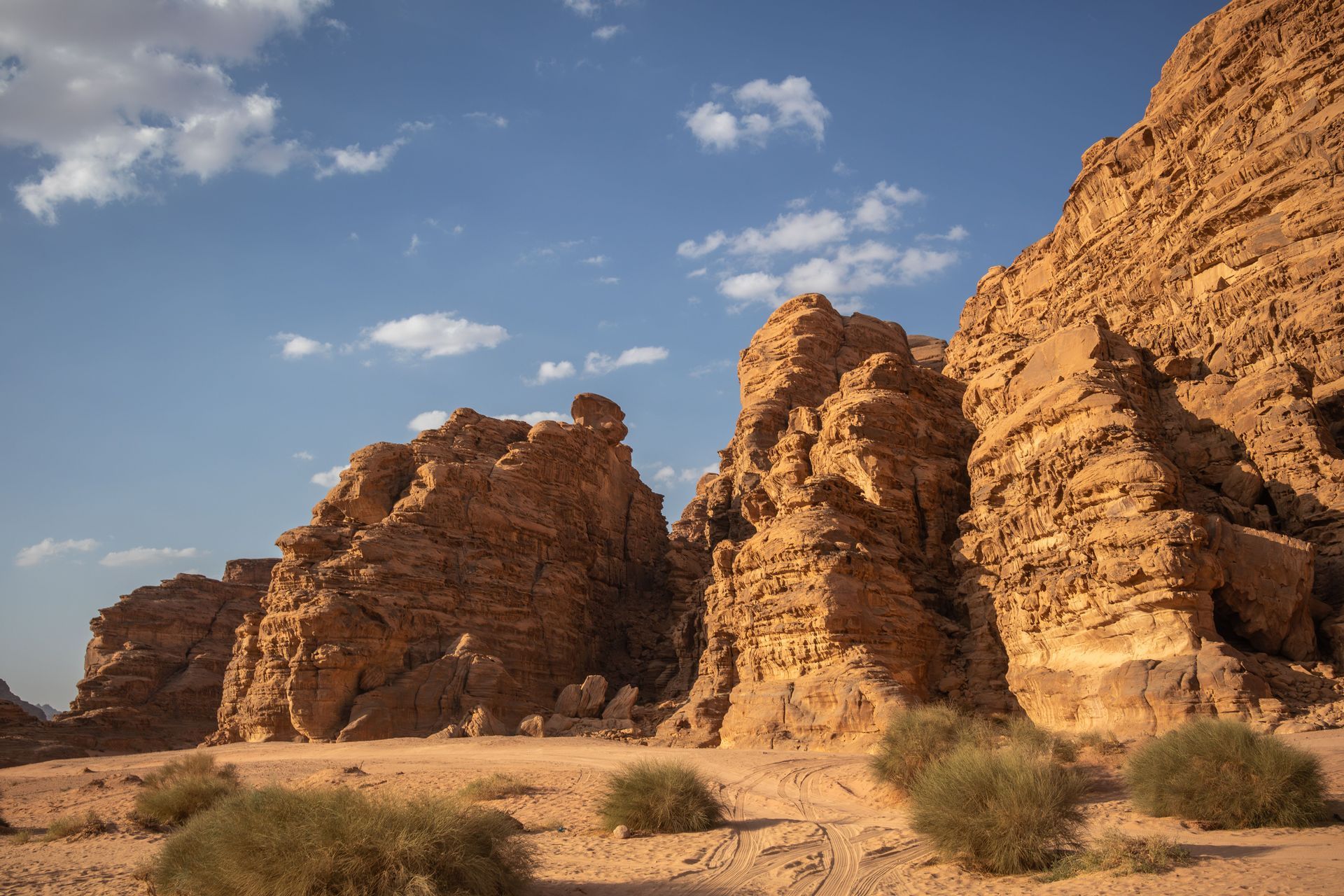
The red sand and towering rock formations create a Martian-like environment that has been the setting for numerous films and continues to attract adventurers and filmmakers from around the world.
Ancient Civilizations and Petroglyphs
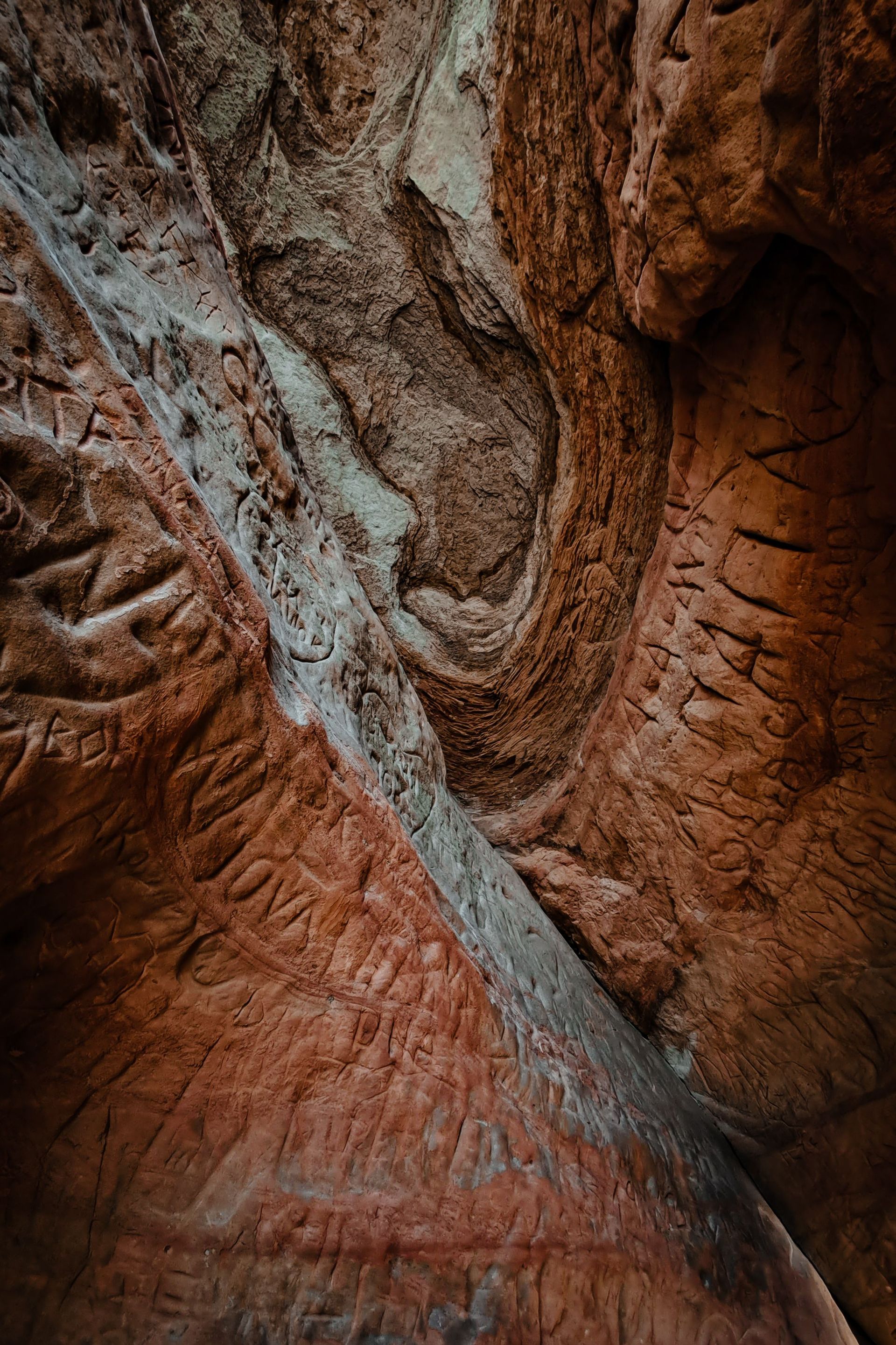
Long before modern travelers arrived, nomadic tribes thrived within the dramatic canyons of Wadi Rum. Scattered across towering sandstone cliffs are thousands of ancient petroglyphs and inscriptions dating back up to 4,000 years. These rock carvings provide a rare window into prehistoric desert life, depicting camel caravans, hunting scenes, Arabian wildlife, and ancient trade routes.
The majority of these engravings were left by the Thamudic and Nabataean civilizations. While simple Thamudic drawings capture horses, ibex, and camels, intricate Nabataean inscriptions in early Aramaic script reflect the region’s importance as a bustling crossroads of commerce. Sites like Khazali Canyon and Anfashieh remain living open-air galleries preserved by the dry desert winds.
The Legend of Lawrence of Arabia
During World War I, Wadi Rum became the strategic desert headquarters for the Great Arab Revolt (1916–1918) against the Ottoman Empire. British officer T.E. Lawrence—immortalized worldwide as Lawrence of Arabia—joined forces with Prince Faisal, using the rugged terrain as an impenetrable fortress to plan guerrilla campaigns across southern Jordan.
The labyrinth of towering sandstone monoliths and hidden desert springs allowed Arab forces to navigate undetected before their decisive 1917 capture of the Red Sea port of Aqaba. Today, landmarks like Lawrence’s Spring, the House of Lawrence, and the famous Seven Pillars of Wisdom keep this cinematic history alive for travelers exploring the valley.
Martian Landscapes & Cinematic Wonders
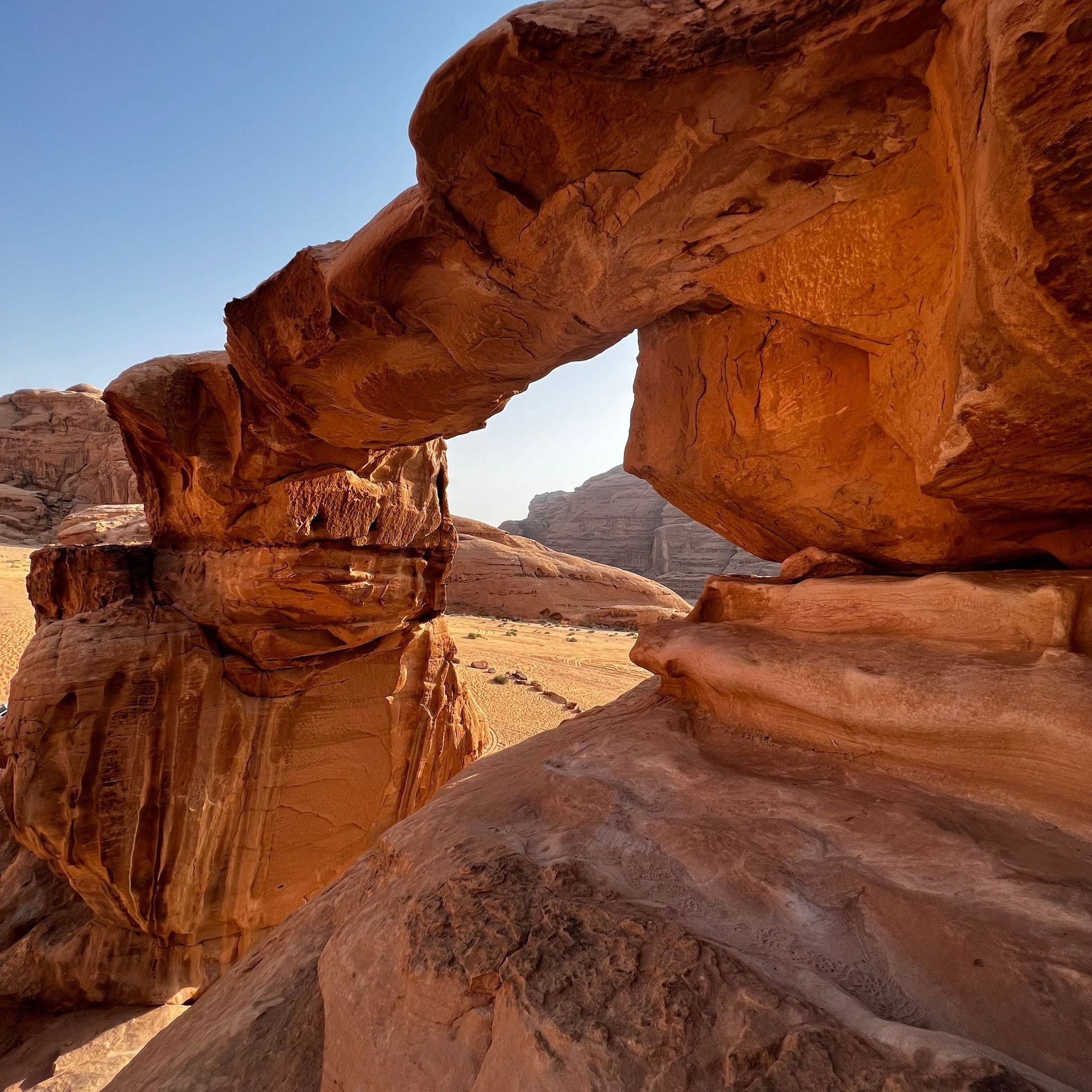
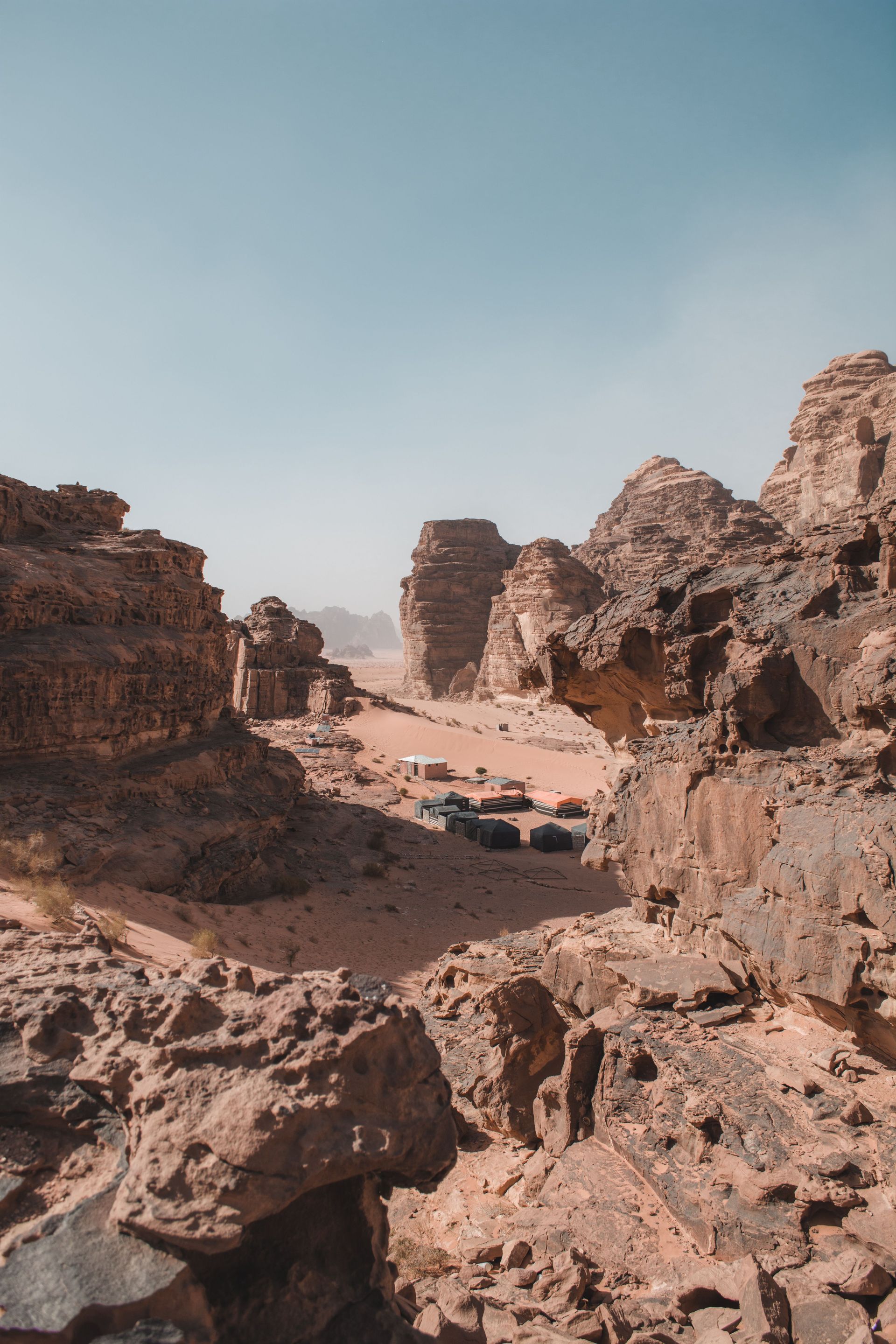
Carved by wind and weather over millions of years, Wadi Rum’s otherworldly red sand valleys and towering sandstone monoliths reach up to 1,700 meters high. Iconic natural landmarks include the Burdah and Um Fruth Rock Bridges, the Seven Pillars of Wisdom, and the shifting red dunes of Al Ramal.
This alien-like terrain has made Wadi Rum Hollywood’s favorite desert backdrop, starring as Mars in *The Martian*, the planet Arrakis in *Dune*, and the galaxy far, far away in *Star Wars: The Rise of Skywalker*.
Bedouin Traditions & Desert Safaris
At the heart of the desert is warm Bedouin hospitality. Guests are welcomed into traditional desert camps with sweet cardamom-and-sage tea. At dinner, experience the famous Zarb—a traditional barbecue of marinated meats and vegetables slow-cooked for hours in an underground sand oven beneath hot embers, followed by music around the campfire.
• 4WD Jeep Safaris: The ultimate way to cross sweeping dunes, hidden canyons, and ancient rock inscriptions.
• Sunset Camel Treks: Experience the slow, timeless rhythm of desert travel across the red sands.
• Hot Air Balloon Flights: Drift peacefully above the monoliths at sunrise for breathtaking aerial views.
• Stargazing & Sandboarding: Slide down towering dunes by day, and gaze at unpolluted Milky Way skies by night.
Planning Your Desert Journey
Explore Wadi Rum with local Bedouin drivers and comfortable private transport. We handle all logistics, from city pickups to desert camp reservations and private 4x4 safaris.
• Best Season: Spring (March–May) and Autumn (September–November) offer comfortable daytime temperatures and cool nights.
• From Aqaba: 1 hour drive (perfect for a seamless day trip).
• From Petra: 2 hours drive (the ideal continuation after exploring the ancient city).
• From Amman: 4 hours drive via the scenic Desert Highway.