Byzantine Empire in Jordan
The Byzantine Empire in Jordan: A Historical and Cultural Analysis
Introduction
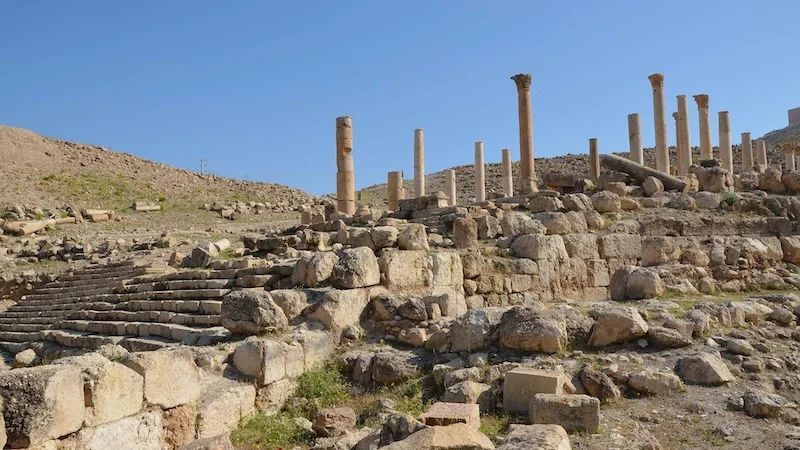
The Byzantine Empire, spanning from the 4th century to the 15th century, significantly influenced the regions it controlled, including modern-day Jordan. This paper aims to provide an academic analysis of the Byzantine presence in Jordan, focusing on the historical, cultural, and architectural contributions. The Byzantine influence in Jordan is evident through numerous archaeological sites, architectural remnants, and artistic achievements, particularly in the realm of mosaic art.
Historical Context
The Byzantine Empire emerged from the eastern portion of the Roman Empire following its division in 285 AD by Emperor Diocletian. The establishment of Constantinople (modern-day Istanbul) as the capital by Constantine the Great in 330 AD marked the beginning of a distinct Byzantine cultural and administrative identity. Jordan, known as Provincia Arabia during Roman times, continued to be a strategic region under Byzantine control due to its trade routes and military importance (Jones, 1964).
Byzantine Administration and Military Presence
The Byzantine administration in Jordan was characterized by a continuation of Roman administrative practices, adapted to the Christian ethos of the empire. The region's strategic importance necessitated the construction of roads, fortresses, and cities to facilitate trade and defense (Kennedy, 1985). Notable military sites include the fortresses at Umm ar-Rasas and the Limes Arabicus, a series of fortifications along the empire's eastern frontier.
Umm ar-Rasas
This site includes a fortified Roman military camp that continued to be used during the Byzantine period. It served as a significant settlement, with over a dozen churches built within its walls, indicating its importance as a Christian center (Piccirillo, 1997).
Limes Arabicus
The defensive line along the eastern frontier included several forts and watchtowers, demonstrating the military strategies employed by the Byzantines to protect their territories from external threats (Isaac, 1992).
Religious Influence and Christianization
The Christianization of Jordan under the Byzantine Empire led to the construction of numerous churches, monasteries, and pilgrimage sites. Christianity became the state religion, and the ecclesiastical architecture from this period reflects the theological and liturgical developments of early Christianity (Browning, 1971).
Madaba
Known for its intricate mosaics, Madaba is home to the Madaba Map, a 6th-century mosaic map of the Holy Land located in the Church of St. George. This map is one of the oldest cartographic depictions of the region and provides valuable insights into the geography and urban planning of the Byzantine period (Piccirillo, 1993).
Mount Nebo
This significant pilgrimage site is believed to be the place where Moses viewed the Promised Land. The site features a Byzantine church with remarkable mosaics depicting various scenes, including hunting and pastoral activities (Donner, 1992).
Petra
Although primarily known for its Nabataean heritage, Petra contains significant Byzantine ruins, including the Petra Church, which was excavated in the 1990s and revealed beautiful mosaics and insights into the city's later period under Byzantine control (Fiema, 2003).
Umm ar-Rasas
A UNESCO World Heritage site, Umm ar-Rasas features extensive Byzantine ruins, including churches with intricate mosaics. The Church of St. Stephen is particularly noteworthy for its detailed floor mosaics, which depict various towns in the region (Piccirillo, 1997).
Jerash
One of the best-preserved Greco-Roman cities, Jerash also contains significant Byzantine remnants. The city features several churches with beautiful mosaics and a cathedral, highlighting the continuity of urban life into the Byzantine period (Kennedy, 1986).
Cultural and Artistic Contributions
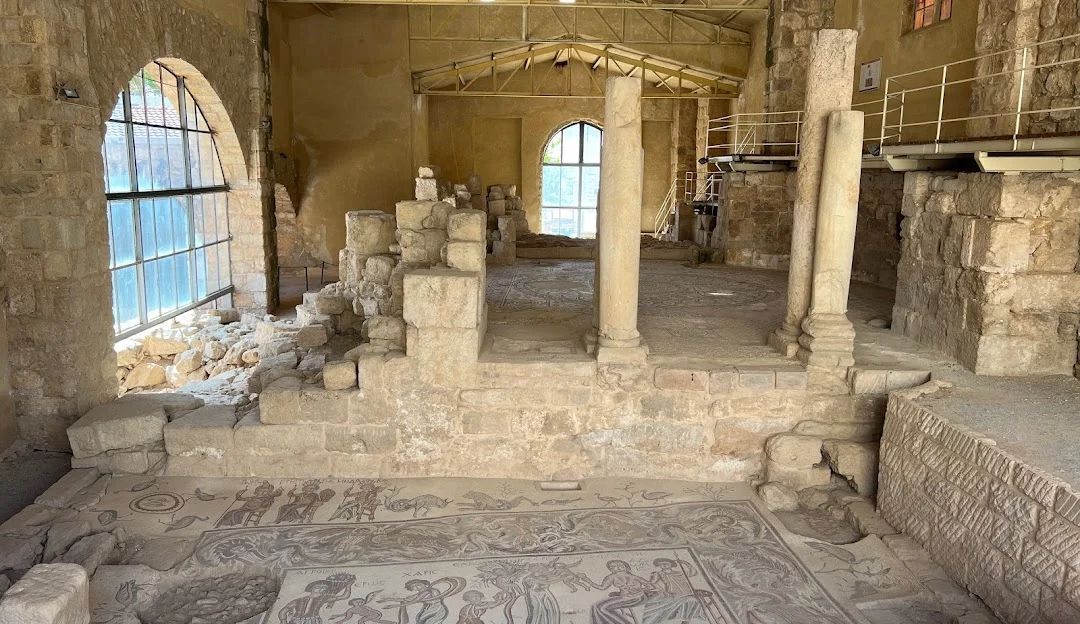
The Byzantine period in Jordan is marked by significant cultural and artistic achievements, particularly in mosaic art. Byzantine mosaics are characterized by their intricate designs, vibrant colors, and depictions of religious and everyday scenes.
Mosaic Art
The mosaics from this period often feature geometric patterns, flora, fauna, and religious iconography. These mosaics decorated churches, public buildings, and private homes, showcasing the artistic skills and religious devotion of the period (Piccirillo, 1986).
Architecture
Byzantine architecture in Jordan included the construction of basilicas, baptisteries, and monasteries. These structures were built using local stone and featured elaborate decorations, including frescoes and mosaics, reflecting the architectural styles and theological symbolism of the time (Ousterhout, 1999).
Notable Sites and Their Significance
Madaba Mosaic Map
This map provides a detailed representation of the Holy Land and serves as a crucial resource for understanding the geography of the region during the Byzantine period (Avi-Yonah, 1954).
Mount Nebo
The mosaics at Mount Nebo depict a variety of scenes, including animals, hunters, and pastoral life, offering insights into the daily life and religious practices of the Byzantine era (Piccirillo, 1993).
Petra Church
The excavation of the Petra Church revealed three aisles separated by columns and a series of mosaics depicting a variety of animals, people, and geometric patterns. The church is a testament to the architectural and artistic prowess of the Byzantines (Fiema, 2003).
Umm ar-Rasas
The site includes the Church of St. Stephen, known for its detailed mosaics that illustrate various towns and cities of the Byzantine world, providing a visual representation of the empire’s extent and influence (Piccirillo, 1997).
Jerash
The Byzantine churches in Jerash, such as the Cathedral of St. Theodore, showcase elaborate mosaic floors and inscriptions that highlight the religious and cultural vibrancy of the city during the Byzantine period (Kennedy, 1986).
Decline and Legacy
The Byzantine presence in Jordan declined after the Muslim conquests in the 7th century. The Battle of Yarmouk in 636 AD was a decisive conflict that led to the Byzantine Empire losing control over the region to the emerging Islamic Caliphate (Howard-Johnston, 2006). Despite this, the Byzantine legacy in Jordan continued to influence the region's cultural and religious landscape. Many Byzantine churches were repurposed for Islamic use, and the architectural and artistic techniques developed during this period persisted in later Islamic art and architecture (Grabar, 1978).
Conclusion
The Byzantine Empire significantly influenced Jordan's history, culture, and landscape. The remains of churches, mosaics, and fortifications across the country stand as a testament to the region's importance during the Byzantine era. Today, these sites offer valuable insights into the rich history and cultural heritage of Jordan during this transformative period.
References
- Avi-Yonah, M. (1954). The Madaba Mosaic Map. The Occupation Exploration Society.
- Browning, R. (1971). The Byzantine Empire. London: Weidenfeld and Nicolson.
- Donner, H. (1992). The Mosaic Map of Madaba: An Introductory Guide. Palaestina Antiqua.
- Fiema, Z. T. (2003). "The Byzantine Church at Petra." In Petra Rediscovered: Lost City of the Nabataeans. New York: Harry N. Abrams.
- Grabar, O. (1978). Early Islamic Art and Architecture. Aldershot: Variorum Reprints.
- Howard-Johnston, J. (2006). East Rome, Sasanian Persia and the End of Antiquity: Historiographical and Historical Studies. Aldershot: Ashgate.
- Isaac, B. (1992). The Limits of Empire: The Roman Army in the East. Oxford: Clarendon Press.
- Jones, A. H. M. (1964). The Later Roman Empire, 284-602: A Social Economic and Administrative Survey. Baltimore: Johns Hopkins University Press.
- Kennedy, H. (1985). The Prophet and the Age of the Caliphates: The Islamic Near East from the Sixth to the Eleventh Century. London: Longman.
- Kennedy, H. (1986). Jerash: A Frontier City of the Roman East. London: Duckworth.
- Ousterhout, R. (1999). Master Builders of Byzantium. Princeton: Princeton University Press.
- Piccirillo, M. (1986). "The Mosaics of Jordan." Biblical Archaeologist , 49(1), 18-29.
- Piccirillo, M. (1993). The Mosaics of Jordan. Amman: American Center of Oriental Research.
- Piccirillo, M. (1997). Umm ar-Rasas (Kastron Mefa’a). Amman: Studium Biblicum Franciscanum.