
Umm ar-Rasas

The Jordanian Mappers • July 10, 2024

Share this article

Umm ar-Rasas: A Byzantine and Early Islamic Site in Jordan

Introduction

Umm ar-Rasas, also known as Kastron Mefa’a, is a significant archaeological site in Jordan that offers insights into the Roman, Byzantine, and early Islamic periods. Designated as a UNESCO World Heritage Site in 2004, Umm ar-Rasas is renowned for its well-preserved mosaics, churches, and unique architectural features. This site provides a comprehensive view of the region's historical evolution from the 3rd to the 9th centuries AD.

Historical Context

Roman and Byzantine Periods

Originally established as a Roman military camp in the 3rd century AD, Umm ar-Rasas played a crucial role in the defense system known as the Limes Arabicus. This network of fortifications protected the eastern borders of the Roman Empire. During the Byzantine period (5th to 7th centuries AD), the site evolved into a significant urban center with numerous churches and monastic communities, reflecting the spread of Christianity in the region (UNESCO, 2024).

Early Islamic Period

Following the Islamic conquest in the 7th century AD, Umm ar-Rasas continued to be inhabited. The site saw the addition of Islamic-style structures, including a mosque, demonstrating the cultural and religious transitions of the period. Despite these changes, Christian communities continued to thrive, as evidenced by the continued use and embellishment of the churches (UNESCO, 2024).

Architectural and Archaeological Significance

Churches and Mosaics

Church of St. Stephen

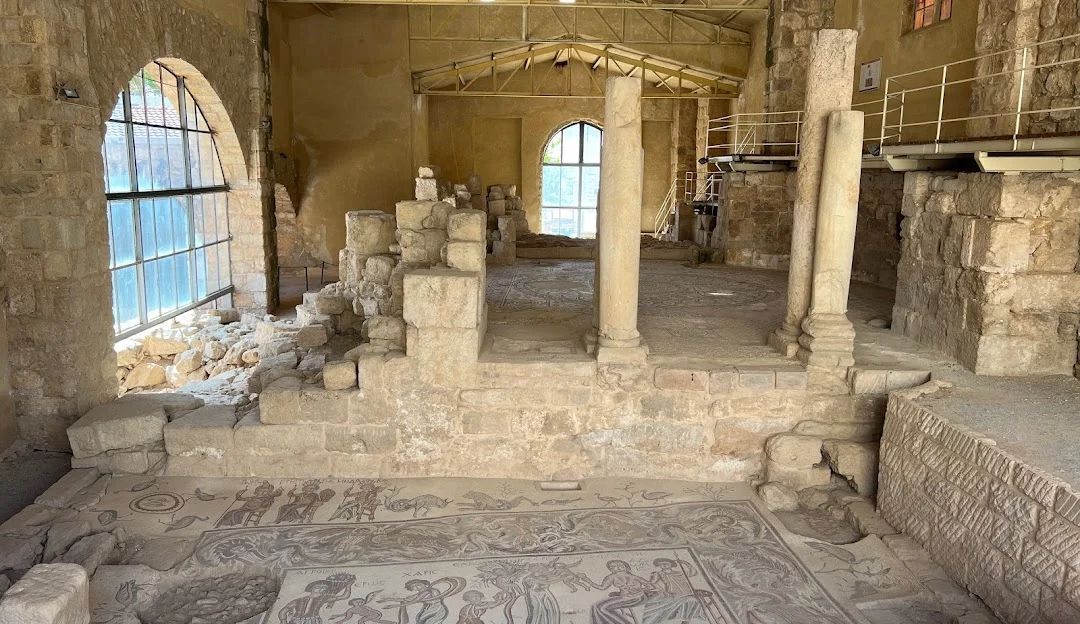
This church is particularly famous for its intricate mosaic floor, which dates to the 8th century AD. The mosaics depict various cities in the region, including those in Palestine and the Nile Delta, providing a valuable geographical record and artistic representation of the Byzantine world (Laidback Trip, 2024).

Other Notable Churches

Umm ar-Rasas hosts over a dozen churches, each with unique mosaics and architectural features. Noteworthy among these are the Church of the Lions, the Church of Bishop Sergius, and the Church of the Rivers, which showcase detailed mosaic work and provide insights into the religious and artistic life of the time (Golden Triangle Road, 2024).

Stylite Tower

Located about 1.6 kilometers north of the main ruins, this tower is a rare example of a stylite structure in the region. Stylite monks would live atop such towers in isolation as a form of asceticism. The tower at Umm ar-Rasas stands as a testament to the monastic practices and spiritual life during the Byzantine period.

Roman Military Camp

 Fortifications and Defensive Walls : The remnants of the Roman military camp, including its defensive walls and gates, highlight the strategic importance of Umm ar-Rasas in the Roman defense network. These structures illustrate the military architecture and urban planning of the period (Golden Triangle Road, 2024).

Cultural and Religious Significance

Umm ar-Rasas serves as a key site for understanding the spread and adaptation of Christianity in the region. The extensive mosaic floors found in the churches are among the finest examples of Byzantine art in the Levant. These mosaics not only reflect religious themes but also depict daily life, showcasing the region's cultural diversity and artistic achievements (UNESCO, 2024).

The site also demonstrates the cultural continuity and transformation during the early Islamic period. The coexistence of Christian and Islamic structures at Umm ar-Rasas provides valuable insights into the region's religious and social dynamics during this transitional period (Golden Triangle Road, 2024).

Conservation and Research

Ongoing archaeological excavations and conservation efforts are crucial for preserving Umm ar-Rasas. The site remains largely unexcavated, offering potential for future discoveries. Conservation efforts focus on protecting the delicate mosaics and stabilizing the ancient structures to ensure they can be studied and appreciated by future generations (Laidback Trip, 2024).

Conclusion

Umm ar-Rasas is a remarkable site that offers a window into the Byzantine and early Islamic periods in Jordan. Its well-preserved churches, mosaics, and unique architectural features make it a valuable resource for understanding the historical and cultural evolution of the region. As a UNESCO World Heritage Site, Umm ar-Rasas continues to attract scholars and visitors alike, contributing to our knowledge of Jordan's rich heritage.

References

  • UNESCO World Heritage Centre. "Um er-Rasas (Kastrom Mefa'a)." Retrieved from UNESCO.
  • Laidback Trip. "Umm ar-Rasas: Everything You Need to Know." Retrieved from Laidback Trip.
  • Golden Triangle Road. "Umm ar-Rasas – Golden Triangle Road." Retrieved from Golden Triangle Road.

Recent Posts

Ancient stone interior with arches, columns, and mosaic floor in a historic ruin
By The Jordanian Mappers • September 28, 2024
Madaba’s Byzantine Heritage: A Mosaic of History Madaba is a Jordanian city, lying some 30 kilometres southwest of Amman, boastfully acknowledged with rich historical and cultural heritage from
Ancient stone ruins with columns on a rocky hillside under a clear sky
By The Jordanian Mappers • September 28, 2024
Pella, Jordan: A Journey Through Time Nestled in the verdant hills of the Jordan Valley, about 130 kilometres north of Amman, lies Pella – a treasure trove of history known locally as Tabaqat F
By The Jordanian Mappers • September 3, 2024
Is Jordan Safe? Current Situation As of Sep. 2024, Jordan continues to be a safe and stable destination for travelers. Despite being in a volatile region, Jordan has maintained internal st
By The Jordanian Mappers • September 3, 2024
Is Jordan Safe for Americans to Travel? Absolutely Yes, and Here’s Why The short answer is yes, Jordan is safe for Americans to travel. In fact, it’s even safer than being at home in the
By The Jordanian Mappers • August 23, 2024
Is Jordan Safe? Yes, Jordan is safe to visit even amid the ongoing Israel-Hamas conflict. Despite regional tensions, Jordan maintains stability and safety for tourists. Here’s a detailed look a
By The Jordanian Mappers • July 10, 2024
The Byzantine Empire in Jordan: A Historical and Cultural Analysis Introduction The Byzantine Empire, spanning from the 4th century to the 15th century, significantly influenced the regions it contr
By The Jordanian Mappers • July 10, 2024
Jerash: A Comprehensive Overview of Its Byzantine Heritage Introduction Jerash, known as Gerasa in antiquity, is one of the most significant and best-preserved archaeological sites in Jordan. Locate
By The Jordanian Mappers • July 7, 2024
5 Jordan World Heritage Sites Jordan’s UNESCO World Heritage Sites are some of the most iconic landmarks in the Middle East. Located between Palestine, Syria, and Iraq, Jordan is a country rich
By The Jordanian Mappers • July 7, 2024
Hiking in Jordan: A Guide to Its Diverse Trails Exploring the hiking trails in Jordan offers a range of experiences with landscapes that vary from arid deserts to lush mountains. Jordan’s uniqu
By The Jordanian Mappers • July 7, 2024
Bethany Beyond the Jordan: Jordan’s Most Significant Christian Site For those interested in Jordan's rich Christian heritage, a visit to Bethany Beyond the Jordan is a must. Believed to be

Show More