
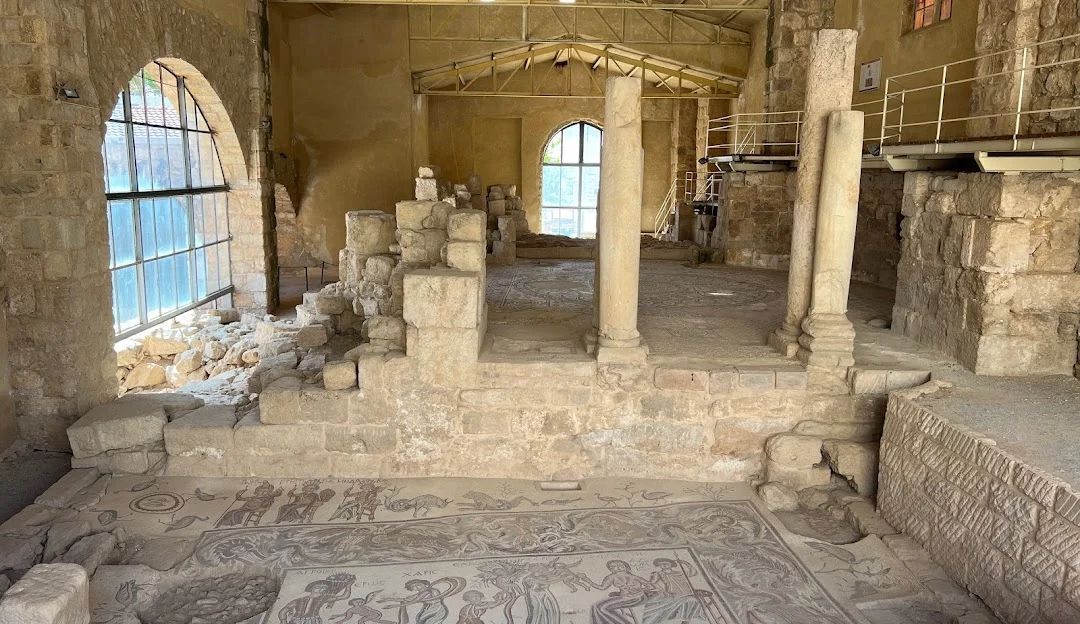
Byzantine Heritage in Jerash

The Jordanian Mappers • July 10, 2024

Share this article

Jerash: A Comprehensive Overview of Its Byzantine Heritage

Introduction

Jerash, known as Gerasa in antiquity, is one of the most significant and best-preserved archaeological sites in Jordan. Located 48 kilometers north of Amman, Jerash showcases an extensive array of ruins from the Roman and Byzantine periods. This site provides invaluable insights into the region's historical, architectural, and cultural developments from the Hellenistic period through the early Islamic era.

Historical Context

Jerash was founded as a Hellenistic city in the 2nd century BCE and became part of the Roman Empire in 63 BCE. It flourished under Roman rule, becoming a member of the Decapolis, a group of ten cities with significant autonomy and cultural exchange. The city reached its zenith in the 2nd century AD, under the patronage of Emperor Hadrian, who visited Jerash in AD 129-130, commemorated by the construction of Hadrian's Arch (Frantz, 1989; Kennedy, 1985).

Byzantine Period

During the Byzantine era (4th-7th centuries AD), Jerash experienced a resurgence, particularly under Emperor Justinian (527-565 AD). The city became an important Christian center, evidenced by the construction of numerous churches. By the 6th century AD, Jerash housed more than 20 churches, many adorned with intricate mosaics. This period saw the city transition from a predominantly pagan metropolis to a hub of Christian activity (Browning, 1971; Sartre, 2005).

Notable Byzantine Sites in Jerash

Church of St. Theodore

Built in 496 AD, this church is notable for its location and the shared atrium with other churches. The mosaics here depict various religious figures and symbols (Piccirillo, 1993).

Church of SS Cosmas and Damian

Dedicated to twin brothers and martyrs, this church features splendid floor mosaics dating to 553 AD, showcasing the rich artistic heritage of the Byzantine period (Frantz, 1989).

Cathedral

Built on the ruins of a Roman temple, this structure includes a shrine to the Virgin Mary and features inscriptions dedicated to St. Mary and the archangels Michael and Gabriel. The outdoor atrium is known for its small pool, which was used in religious celebrations (Burns, 2017).

Temple of Artemis

Although originally a Roman temple, it was converted during the Byzantine period. The temple's impressive Corinthian columns remain a highlight of the site (Kennedy, 1986).

Nymphaeum

This elaborate public fountain, dedicated to the nymphs, illustrates the city's architectural sophistication and its adaptation to Christian contexts during the Byzantine period (Browning, 1971).

Cultural and Religious Significance

Jerash's transformation during the Byzantine period reflects the broader shift in the region from paganism to Christianity. The numerous churches and their associated mosaics provide evidence of the city's religious life and the role it played in early Christian history. Jerash was a bishopric, with bishops from the city participating in significant ecclesiastical councils (Sartre, 2005; Browning, 1971).

The adaptation of Roman structures for Christian purposes also highlights the continuity and transformation of urban spaces. For instance, the Roman Temple of Artemis was repurposed as a Christian church, illustrating the seamless integration of new religious practices into existing urban frameworks (Kennedy, 1985).

Archaeological Excavations and Research

Archaeological excavations in Jerash began in the early 20th century and have continued to the present day. These efforts have been pivotal in uncovering the city's rich historical layers and understanding its urban development. Key archaeological projects have been conducted by various international teams, contributing significantly to the field of Near Eastern archaeology (Frantz, 1989).

Recent excavations have focused on exploring the city's urban layout, the function of public and private spaces, and the transitions between different historical periods. The findings have provided new insights into the social, economic, and religious life of Jerash during the Byzantine period (Kennedy, 1985).

Conservation Efforts

Conservation efforts at Jerash aim to preserve its extensive ruins and mosaics for future generations. These efforts include stabilizing structures, restoring mosaics, and implementing measures to protect the site from environmental and human-induced damage. International collaborations have played a crucial role in these conservation initiatives, ensuring that Jerash remains a valuable resource for both researchers and visitors (Burns, 2017).

Conclusion

Jerash stands as a testament to the rich historical tapestry of Jordan. Its well-preserved ruins from the Roman and Byzantine periods offer a unique window into the architectural, cultural, and religious transformations that shaped the region. As a major tourist attraction and a site of ongoing archaeological research, Jerash continues to provide valuable insights into the ancient world.

References


  • Browning, R. (1971). The Byzantine Empire. London: Weidenfeld and Nicolson.
  • Burns, R. (2017). Monuments of Syria: A Guide. I.B. Tauris.
  • Frantz, A. (1989). Byzantine Art and Archaeology. Variorum.
  • Kennedy, H. (1985). The Prophet and the Age of the Caliphates: The Islamic Near East from the Sixth to the Eleventh Century. London: Longman.
  • Kennedy, H. (1986). Jerash: A Frontier City of the Roman East. London: Duckworth.
  • Piccirillo, M. (1993). The Mosaics of Jordan. Amman: American Center of Oriental Research.
  • Sartre, M. (2005). The Middle East under Rome. Harvard University Press.

Recent Posts

Ancient stone interior with arches, columns, and mosaic floor in a historic ruin
By The Jordanian Mappers • September 28, 2024
Madaba’s Byzantine Heritage: A Mosaic of History Madaba is a Jordanian city, lying some 30 kilometres southwest of Amman, boastfully acknowledged with rich historical and cultural heritage from
Ancient stone ruins with columns on a rocky hillside under a clear sky
By The Jordanian Mappers • September 28, 2024
Pella, Jordan: A Journey Through Time Nestled in the verdant hills of the Jordan Valley, about 130 kilometres north of Amman, lies Pella – a treasure trove of history known locally as Tabaqat F
By The Jordanian Mappers • September 3, 2024
Is Jordan Safe? Current Situation As of Sep. 2024, Jordan continues to be a safe and stable destination for travelers. Despite being in a volatile region, Jordan has maintained internal st
By The Jordanian Mappers • September 3, 2024
Is Jordan Safe for Americans to Travel? Absolutely Yes, and Here’s Why The short answer is yes, Jordan is safe for Americans to travel. In fact, it’s even safer than being at home in the
By The Jordanian Mappers • August 23, 2024
Is Jordan Safe? Yes, Jordan is safe to visit even amid the ongoing Israel-Hamas conflict. Despite regional tensions, Jordan maintains stability and safety for tourists. Here’s a detailed look a
By The Jordanian Mappers • July 10, 2024
The Byzantine Empire in Jordan: A Historical and Cultural Analysis Introduction The Byzantine Empire, spanning from the 4th century to the 15th century, significantly influenced the regions it contr
By The Jordanian Mappers • July 10, 2024
Umm ar-Rasas: A Byzantine and Early Islamic Site in Jordan Introduction Umm ar-Rasas, also known as Kastron Mefa’a, is a significant archaeological site in Jordan that offers insights into the
By The Jordanian Mappers • July 7, 2024
5 Jordan World Heritage Sites Jordan’s UNESCO World Heritage Sites are some of the most iconic landmarks in the Middle East. Located between Palestine, Syria, and Iraq, Jordan is a country rich
By The Jordanian Mappers • July 7, 2024
Hiking in Jordan: A Guide to Its Diverse Trails Exploring the hiking trails in Jordan offers a range of experiences with landscapes that vary from arid deserts to lush mountains. Jordan’s uniqu
By The Jordanian Mappers • July 7, 2024
Bethany Beyond the Jordan: Jordan’s Most Significant Christian Site For those interested in Jordan's rich Christian heritage, a visit to Bethany Beyond the Jordan is a must. Believed to be

Show More