
Pella

The Jordanian Mappers • September 28, 2024

Share this article

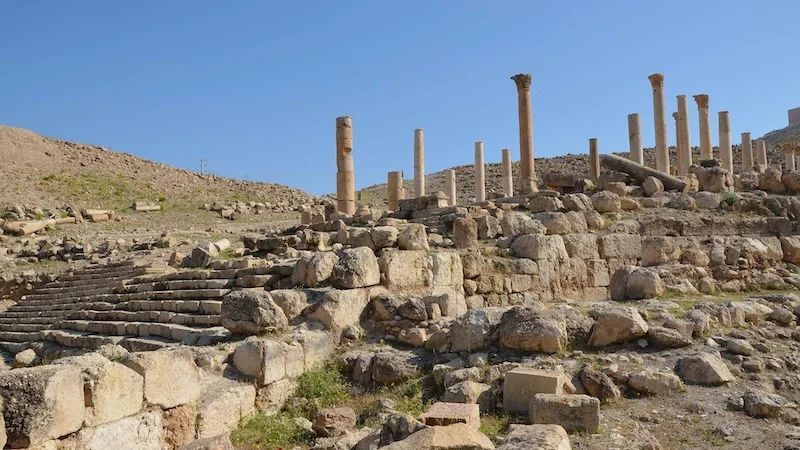
Ancient stone ruins with columns on a rocky hillside under a clear sky

Pella, Jordan: A Journey Through Time

Nestled in the verdant hills of the Jordan Valley, about 130 kilometres north of Amman, lies Pella – a treasure trove of history known locally as Tabaqat Fahl. This ancient city, with its sprawling ruins and breathtaking vistas, offers visitors a unique glimpse into the rich tapestry of Middle Eastern history.

A Legacy Spanning Millennia

Pella's story begins in the mists of prehistory, with evidence of human habitation dating back to the Neolithic period, around 8000 BCE. As you walk among the ruins, you're treading on ground that has witnessed the rise and fall of countless civilizations. From humble beginnings as a small agricultural settlement, Pella became a significant urban centre, hosting a parade of cultures including Canaanite, Israelite, Greek, Roman, Byzantine, and Islamic.

The city's golden age came during the Hellenistic and Roman periods when it was counted among the prestigious Decapolis – a group of ten cities that formed the eastern frontier of the Roman Empire. Legend has it that Alexander the Great himself may have refounded the city, naming it after his birthplace in Macedonia. This connection to the legendary conqueror adds an extra layer of intrigue to Pella's already fascinating history.

Unearthing the Past

Archaeological excavations at Pella have been ongoing since the 1960s, revealing layer upon layer of history. One of the most prominent features of the site is Tell Husn, a large mound that has yielded artefacts spanning from the Bronze Age to the Islamic period. Each pottery shard, coin, and building foundation tells a part of Pella's story, offering archaeologists and historians valuable insights into life in the ancient Near East.

Among the most impressive discoveries at Pella are the remains of a Roman theatre. Although only partially excavated, this structure speaks volumes about the city's importance during the Roman era. One can almost hear the echoes of ancient performances and political debates that once filled the air.

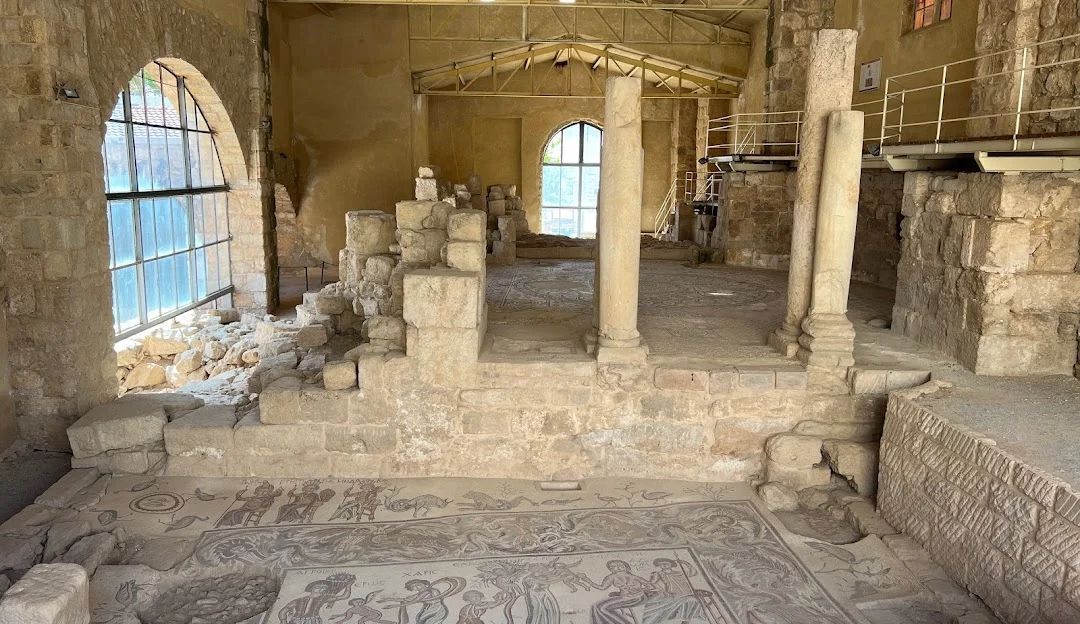
The Byzantine period left its mark on Pella in the form of several churches, including a large basilica complex. The Western Church, with its beautifully preserved floor mosaics, is a particular highlight. These intricate designs, featuring geometric patterns and Christian symbols, offer a window into the artistic and religious sensibilities of the time.

As the Byzantine Empire waned and Islam rose to prominence, Pella adapted once again. The foundations of an early Islamic mosque discovered at the site demonstrate the city's continued importance through changing times. This architectural evolution reflects the broader cultural shifts occurring across the region during this pivotal period in history.

A Crossroads of Cultures

What makes Pella truly remarkable is its role as a crossroads of cultures. The city's strategic location and fertile lands made it a natural hub for trade and cultural exchange. Phoenician merchants, Greek philosophers, Roman soldiers, Byzantine priests, and Islamic scholars all left their mark on this ancient city.

This cultural melting pot is evident in the diverse artefacts uncovered at Pella. Imported pottery from as far away as Egypt and Greece speaks to the city's far-reaching trade connections. Inscriptions in various languages – including Greek, Latin, and Arabic – testify to the multilingual nature of this cosmopolitan centre.

Pella Today: A Window to the Past

Today, Pella stands as a testament to the enduring legacy of human civilization in the Middle East. As you explore the site, you'll find yourself on a journey through time, from the earliest days of agriculture to the golden age of Islamic science and beyond.

For history enthusiasts and casual visitors alike, Pella offers a unique opportunity to connect with the past. The site's museum houses an impressive collection of artefacts, providing context and bringing the ancient city to life. As you stand atop Tell Husn, gazing out over the Jordan Valley, you can't help but feel a sense of connection to the countless generations who have stood in that same spot, marvelling at the view.

Planning Your Visit

The best time to visit Pella is during the spring (March to May) or autumn (September to November) when the weather is mild and comfortable for exploration. The site is accessible by car from Amman, with the journey taking about two hours along the Amman-Irbid Highway.

For those seeking a deeper understanding of the site, guided tours are available and highly recommended. These knowledgeable guides can bring the ruins to life, sharing stories and insights that might otherwise be missed.

As you plan your trip, consider combining your visit to Pella with stops at other nearby historical sites. The 12th-century Ajloun Castle and the ruins of Umm Qais (ancient Gadara) are both within easy reach and offer their unique perspectives on the region's rich history.


Recent Posts

Ancient stone interior with arches, columns, and mosaic floor in a historic ruin
By The Jordanian Mappers • September 28, 2024
Madaba’s Byzantine Heritage: A Mosaic of History Madaba is a Jordanian city, lying some 30 kilometres southwest of Amman, boastfully acknowledged with rich historical and cultural heritage from
By The Jordanian Mappers • September 3, 2024
Is Jordan Safe? Current Situation As of Sep. 2024, Jordan continues to be a safe and stable destination for travelers. Despite being in a volatile region, Jordan has maintained internal st
By The Jordanian Mappers • September 3, 2024
Is Jordan Safe for Americans to Travel? Absolutely Yes, and Here’s Why The short answer is yes, Jordan is safe for Americans to travel. In fact, it’s even safer than being at home in the
By The Jordanian Mappers • August 23, 2024
Is Jordan Safe? Yes, Jordan is safe to visit even amid the ongoing Israel-Hamas conflict. Despite regional tensions, Jordan maintains stability and safety for tourists. Here’s a detailed look a
By The Jordanian Mappers • July 10, 2024
The Byzantine Empire in Jordan: A Historical and Cultural Analysis Introduction The Byzantine Empire, spanning from the 4th century to the 15th century, significantly influenced the regions it contr
By The Jordanian Mappers • July 10, 2024
Umm ar-Rasas: A Byzantine and Early Islamic Site in Jordan Introduction Umm ar-Rasas, also known as Kastron Mefa’a, is a significant archaeological site in Jordan that offers insights into the
By The Jordanian Mappers • July 10, 2024
Jerash: A Comprehensive Overview of Its Byzantine Heritage Introduction Jerash, known as Gerasa in antiquity, is one of the most significant and best-preserved archaeological sites in Jordan. Locate
By The Jordanian Mappers • July 7, 2024
5 Jordan World Heritage Sites Jordan’s UNESCO World Heritage Sites are some of the most iconic landmarks in the Middle East. Located between Palestine, Syria, and Iraq, Jordan is a country rich
By The Jordanian Mappers • July 7, 2024
Hiking in Jordan: A Guide to Its Diverse Trails Exploring the hiking trails in Jordan offers a range of experiences with landscapes that vary from arid deserts to lush mountains. Jordan’s uniqu
By The Jordanian Mappers • July 7, 2024
Bethany Beyond the Jordan: Jordan’s Most Significant Christian Site For those interested in Jordan's rich Christian heritage, a visit to Bethany Beyond the Jordan is a must. Believed to be

Show More