
Amman Highlights Travel Guide

The Jordanian Mappers • June 22, 2024

Share this article

Top Historical Sites in Amman: A Comprehensive Guide

 Amman, the vibrant capital of Jordan, is a city where ancient history blends seamlessly with modern life. For history enthusiasts, Amman offers a wealth of historical sites that provide a glimpse into its rich past. Here’s a comprehensive guide to the top historical sites in Amman.


The Citadel (Jabal al-Qal’a)

 The Amman Citadel, perched on one of the city’s highest hills, is a must-visit for anyone interested in history and archaeology. This site has been inhabited since the Bronze Age and offers a panoramic view of the city.

• Key Highlights:

 • Temple of Hercules: Dating back to the Roman period, this temple is one of the most prominent structures in the Citadel.

 • Umayyad Palace: An impressive example of early Islamic architecture, this palace complex includes residential and administrative buildings.

 • Byzantine Church: Ruins of a church from the Byzantine period, showcasing early Christian architecture.


Roman Theatre

 Located in the heart of downtown Amman, the Roman Theatre is an impressive remnant of ancient Philadelphia (the ancient name of Amman). Built in the 2nd century AD, it could accommodate up to 6,000 spectators.

• Key Highlights:

 • Nymphaeum: A nearby Roman-era public fountain that once served as a focal point for the city.

 • Folklore Museum: Located within the theatre complex, this museum displays traditional Jordanian artifacts and costumes.

 • Museum of Popular Traditions: Another museum within the theatre, showcasing Jordanian and Palestinian traditional attire and crafts.


The Jordan Museum

 For a comprehensive understanding of Jordan’s history and culture, a visit to the Jordan Museum is essential. This modern museum houses some of the country’s most important archaeological findings.

• Key Highlights:

 • Ain Ghazal Statues: Some of the oldest human statues ever found, dating back to 7250 BC.

 • Dead Sea Scrolls: A portion of the famous scrolls that were discovered in the Qumran Caves.

 • Historical Artifacts: Exhibits range from prehistoric artifacts to items from the Islamic period.


Qasr al-Abd

 Located in the village of Iraq al-Amir, about 17 km west of Amman, Qasr al-Abd is an ancient Hellenistic palace that dates back to the 2nd century BC. It’s one of the few examples of Hellenistic architecture in Jordan.

• Key Highlights:

• Unique Architecture: The palace is constructed from massive stone blocks and features intricate carvings of animals and mythological creatures.

• Historical Significance: Believed to have been built by Hyrcanus of Jerusalem, this site provides insights into the region’s Hellenistic period.


Darat al Funun

 While primarily an arts center, Darat al Funun is housed in a collection of historic buildings that date back to the early 20th century. The site also includes the remains of a Byzantine church.

• Key Highlights:

 • Byzantine Ruins: The foundation and remnants of a Byzantine church provide a historical backdrop to the contemporary art exhibits.

 • Historical Buildings: The center is located in three renovated 1920s buildings, each with its unique architectural charm.


King Abdullah I Mosque

 Completed in 1989, the King Abdullah I Mosque is a relatively modern addition to Amman’s landscape but holds significant historical value as a symbol of Jordan’s Islamic heritage.

• Key Highlights:

 • Blue Dome: The mosque’s striking blue dome is an iconic feature of Amman’s skyline.

 • Islamic Museum: Located within the mosque complex, the museum showcases Islamic artifacts and a collection of the late King Abdullah I’s personal belongings.


Tips for Visiting Historical Sites in Amman

 • Dress Appropriately: While Amman is a modern city, it’s respectful to dress modestly when visiting historical and religious sites.

 • Stay Hydrated: Amman can be quite hot, especially in summer, so carry water with you.

 • Hire a Guide: To fully appreciate the historical context, consider hiring a local guide.

 • Plan Your Visit: Some sites may have specific opening hours or may be closed on certain days, so check in advance.

Recent Posts

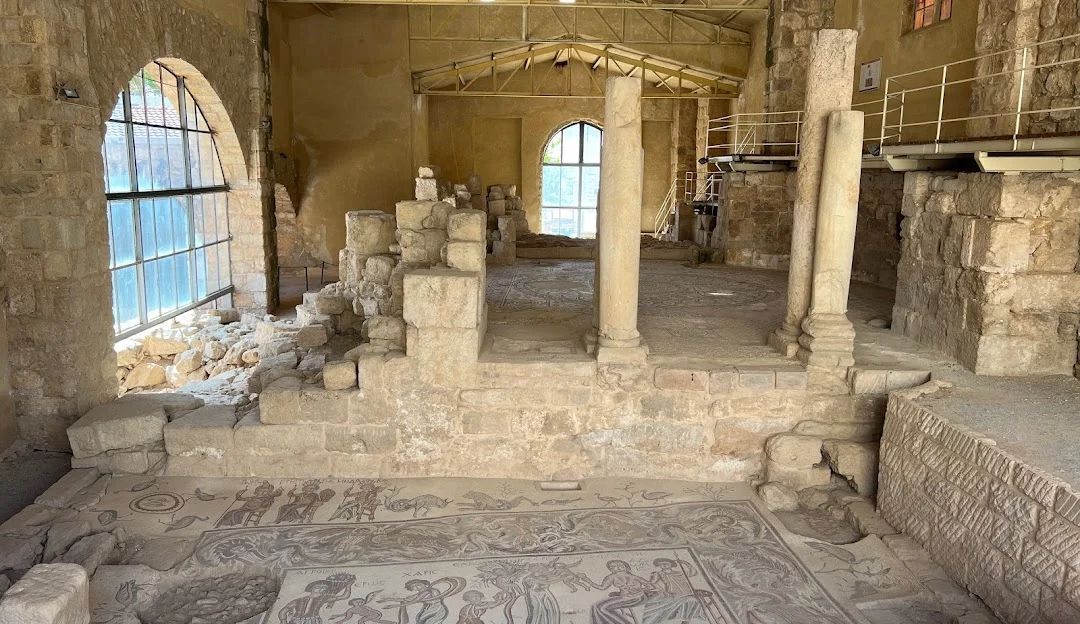
Ancient stone interior with arches, columns, and mosaic floor in a historic ruin
By The Jordanian Mappers • September 28, 2024
Madaba’s Byzantine Heritage: A Mosaic of History Madaba is a Jordanian city, lying some 30 kilometres southwest of Amman, boastfully acknowledged with rich historical and cultural heritage from
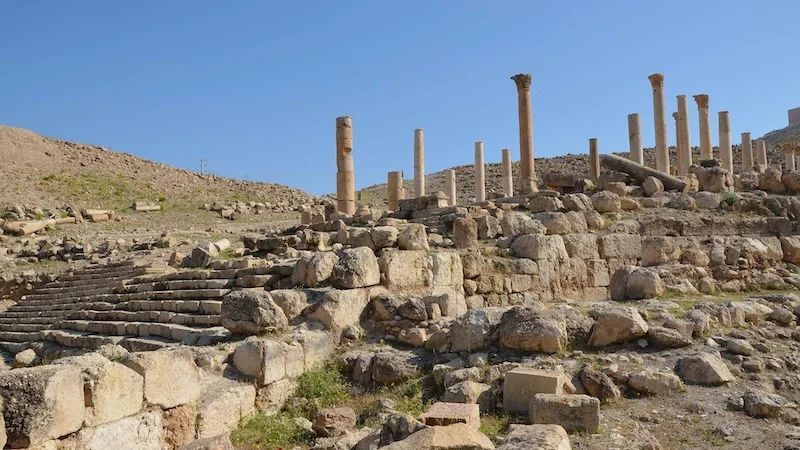
Ancient stone ruins with columns on a rocky hillside under a clear sky
By The Jordanian Mappers • September 28, 2024
Pella, Jordan: A Journey Through Time Nestled in the verdant hills of the Jordan Valley, about 130 kilometres north of Amman, lies Pella – a treasure trove of history known locally as Tabaqat F
By The Jordanian Mappers • September 3, 2024
Is Jordan Safe? Current Situation As of Sep. 2024, Jordan continues to be a safe and stable destination for travelers. Despite being in a volatile region, Jordan has maintained internal st
By The Jordanian Mappers • September 3, 2024
Is Jordan Safe for Americans to Travel? Absolutely Yes, and Here’s Why The short answer is yes, Jordan is safe for Americans to travel. In fact, it’s even safer than being at home in the
By The Jordanian Mappers • August 23, 2024
Is Jordan Safe? Yes, Jordan is safe to visit even amid the ongoing Israel-Hamas conflict. Despite regional tensions, Jordan maintains stability and safety for tourists. Here’s a detailed look a
By The Jordanian Mappers • July 10, 2024
The Byzantine Empire in Jordan: A Historical and Cultural Analysis Introduction The Byzantine Empire, spanning from the 4th century to the 15th century, significantly influenced the regions it contr
By The Jordanian Mappers • July 10, 2024
Umm ar-Rasas: A Byzantine and Early Islamic Site in Jordan Introduction Umm ar-Rasas, also known as Kastron Mefa’a, is a significant archaeological site in Jordan that offers insights into the
By The Jordanian Mappers • July 10, 2024
Jerash: A Comprehensive Overview of Its Byzantine Heritage Introduction Jerash, known as Gerasa in antiquity, is one of the most significant and best-preserved archaeological sites in Jordan. Locate
By The Jordanian Mappers • July 7, 2024
5 Jordan World Heritage Sites Jordan’s UNESCO World Heritage Sites are some of the most iconic landmarks in the Middle East. Located between Palestine, Syria, and Iraq, Jordan is a country rich
By The Jordanian Mappers • July 7, 2024
Hiking in Jordan: A Guide to Its Diverse Trails Exploring the hiking trails in Jordan offers a range of experiences with landscapes that vary from arid deserts to lush mountains. Jordan’s uniqu

Show More