If you're asking, you've probably already read your government's travel advice and it made you hesitate. That's reasonable. We'd rather give you the actual picture than tell you everything is fine.
We live and work in Wadi Musa, next to Petra, and we run tours across the country. Here's what the advisories say, what we see on the ground, and how we'd think about the decision if we were you.
Last updated: 29 October 2026. This changes quickly. Check official advice again before you book and before you fly.
What governments are saying
The United States rates Jordan Level 3, "Reconsider travel", in an advisory issued on 29 August 2026. It cites terrorism and armed conflict. It also lists places where it says not to travel at all: the border areas with Syria and Iraq, including Mansheyat al Ghayyath and Ruwayshid, and the designated Syrian refugee camps.
Earlier versions this year also advised reconsidering travel to Ma'an city and designated areas of Ma'an Governorate, and to Zarqa. Petra is in Ma'an Governorate, although it's a long way from Ma'an city. Read the current wording yourself on travel.state.gov rather than relying on us or anyone else's summary.
The background is the regional conflict. The US advisory points to hostilities between the United States and Iran that began on 28 February 2026, with a continuing threat of drone and missile attacks and significant disruption to commercial flights.
Other governments. Travel reporting from October 2026 says Canada, the UK, Australia, New Zealand and several European countries have issued or refreshed advisories flagging an unpredictable security environment. Check your own government's page.
One more thing to check: insurance. Some travel insurance policies exclude countries under a "reconsider travel" notice. Read your policy, or call your insurer, before you pay for anything non-refundable.
What we see on the ground
This is where we have to be careful, because it's your decision and your risk.
Jordan is open to visitors. Reporting from October 2026 says the country remains open and that most daily life continues normally, even with the elevated advisories. That matches what many travel writers have said about Jordan for years: it's one of the more stable countries in a difficult region, and violent crime against tourists is rare.
But "open" is not the same as "no risk", and the advisories are not boilerplate. The main concerns come from outside Jordan: regional conflict, the possibility of missile or drone activity, and sudden disruption to flights and border crossings. A 2026 German advisory summary also notes that road closures and extra checkpoints can occur near border areas, including along the Dead Sea Highway.
The public numbers tell part of the story. Petra received 281,123 visitors from January to July 2026, about 3.7% fewer than in the same months of 2025, and foreign visitors fell from roughly 212,000 to 172,000. The Jordan Hotel Association reported Petra hotel occupancy of about 13% for five-star hotels, 5% for four-star and 2% for three-star. Central Bank figures show tourism revenue from US visitors down about 21% and from Europeans down about 25% over the first seven months of 2026. In plain terms: the sites are open, and visitors are fewer. Public events have carried on, too: Jordanian news coverage shows the Jerash Festival running in July 2026.
What it means for the places you probably want to visit
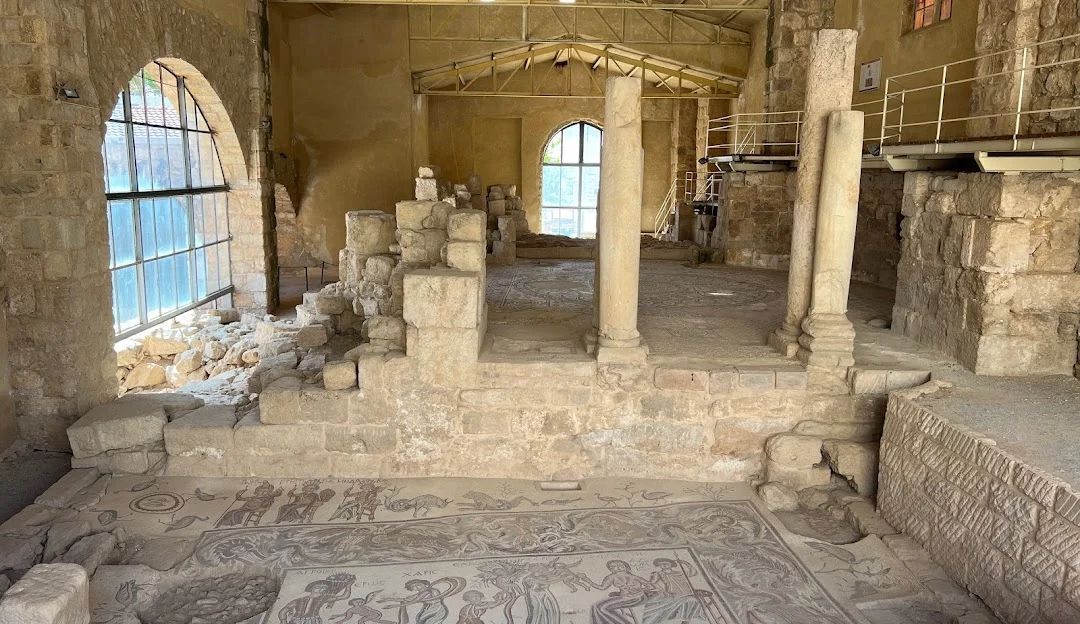
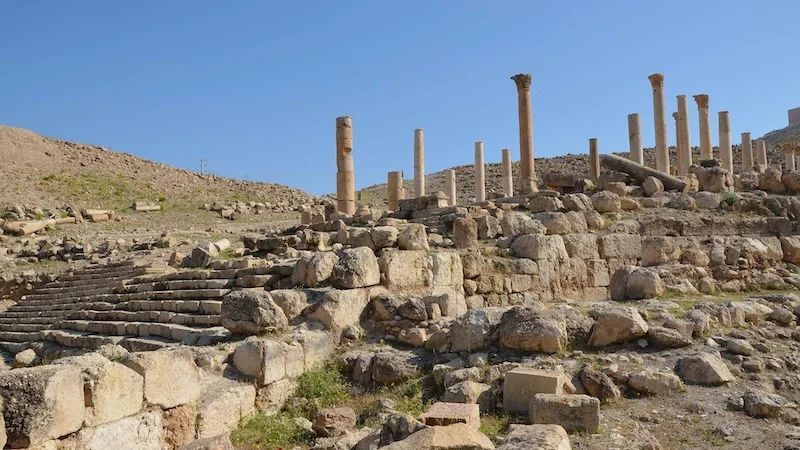
Petra and Wadi Musa. Open, with fewer visitors than usual (see the figures above). Petra still closes in bad weather.
Amman and the Dead Sea. The Dead Sea Highway is one route where advisories mention possible road closures and extra checkpoints.
The border areas. The advisories are most serious about the areas near Syria and Iraq. Tourist routes don't go near them, and neither would we.
The Israel–Jordan crossings. If your itinerary includes crossing, allow extra time. Crossing hours and closures can change at short notice, particularly at the King Hussein (Allenby) Bridge. More in our guide to
crossing between Jordan and Israel.
If you're from the United States
Americans ask us this more than anyone, and the answer is the same as above, with a few specific steps.
- Read the State Department advisory in full. It's the authoritative source for what applies to you.
- Enrol in the Smart Traveler Enrollment Program (STEP) so the embassy can contact you in an emergency.
- Know that US embassy operations in Jordan have been affected this year. The advisory says non-emergency government staff and their families were ordered to leave on 2 March 2026. That can affect how much help the embassy can give you.
- Keep copies of your passport and your itinerary, and share them with someone at home.
Everyday safety, the boring stuff
The things that go wrong for most visitors to Jordan are not dramatic.
- Heat and dehydration in summer, especially at Petra and in Wadi Rum.
- Flash floods in winter. Petra closes in bad weather, and some canyon trails close entirely. See
when trails open.
- Traffic. Roads between cities are fine, but driving styles differ, and night driving on rural roads is harder. More on
driving in Jordan.
- Petty scams and overcharging, mostly around taxis and souvenirs. Agree prices first.
- Tap water isn't generally recommended for drinking. Use bottled or filtered water.
Solo women. Women travelling alone report that Jordan is one of the easier countries in the region to do it in. Women are free to travel without a male companion and aren't required to cover their hair. Reported problems are mostly staring, the odd shout from passers-by, taxi overcharging and pickpockets, and most travellers say that ignoring the attention is enough. The practical advice that keeps coming up:
- Dress modestly: shoulders and knees covered, and long sleeves and trousers if you'd like to draw less attention.
- Agree a taxi fare before you get in, or use a ride-hailing app in Amman.
- Don't walk alone at night in unfamiliar areas.
- Get a local SIM card so you can navigate and call for help.
The terrorism and conflict warnings in the advisories apply to everyone, not just solo travellers.
How to decide
Here's how we'd think about it.
You might want to go ahead if you're comfortable travelling to a country with an elevated advisory, your insurance covers it, your bookings are flexible, and you'll follow your government's updates up to the day you fly.
You might want to wait if your insurer excludes the destination, you have a medical condition that makes disruption risky, you're travelling with young children and a low tolerance for uncertainty, or your bookings are non-refundable and you'd feel trapped.
Neither answer is wrong. We'd rather you decide with the full picture than arrive nervous.
If you do go:
- Register with your embassy's traveller programme.
- Book flights and hotels with flexible terms where you can.
- Check advisories again a week before and the day before you fly.
- Download offline maps, and keep your phone charged.
- Tell someone at home your plans.
Questions?
If you have questions, message us on WhatsApp or
contact us. We'll tell you what we're seeing this week.
FAQ
Is Jordan safe to visit right now?
Jordan is open to visitors and most of the country is functioning normally, but several governments, including the US, have raised their advisories for 2026 because of regional conflict and terrorism risk. Read your government's current advice and check your insurance before booking.
Is Jordan safe for Americans?
The US State Department rates Jordan Level 3, "Reconsider travel", as of its 29 August 2026 advisory. That applies to US citizens specifically. Read the full advisory, enrol in STEP, and check that your insurance covers travel to a "reconsider travel" destination.
Which parts of Jordan should I avoid?
Governments advise against travel to the border areas with Syria and Iraq and to designated Syrian refugee camps. Tourist routes such as Petra, Wadi Rum, Amman, Jerash and the Dead Sea don't go through these areas. Always check the current advisory for the full list.
Is Jordan safe for solo women?
Many solo women travel in Jordan and describe it as one of the easier countries in the region for it. Dress modestly, agree taxi fares in advance, avoid walking alone at night, and get a local SIM card. The terrorism and conflict warnings in government advisories apply to all travellers.
Is Petra open?
Yes, as of the date of this post, with fewer visitors than usual. Petra closes in bad weather, so check conditions in winter.
What happens to my insurance?
Some policies exclude destinations under a "reconsider travel" advisory. Call your insurer and ask directly, and get the answer in writing.