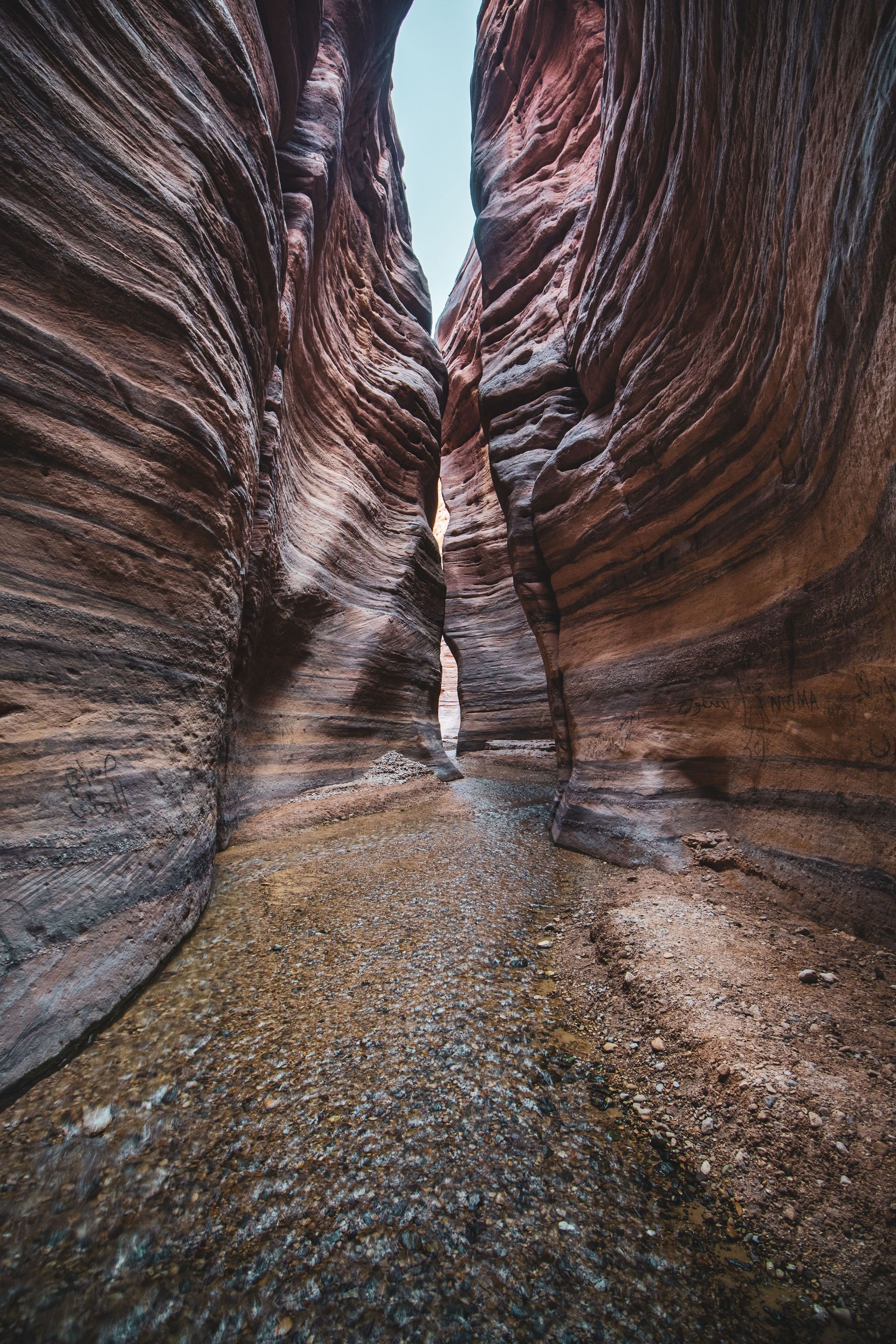
The Siq doesn't announce itself. You walk downhill from the Visitor Centre, past a few tomb blocks, a dam, a short tunnel, and then the cliffs close in until you could nearly touch both walls. For the next twenty minutes or so it's mostly stone and other people's footsteps. Then the Treasury appears in the gap at the far end, and almost everyone slows down.
We've been running tours from Wadi Musa, the town at the gate, for more than seven years, and we've walked this route more times than we can count. This guide is what we tell friends who ask us how to visit Petra without wasting the day.
Short version: go early, wear proper shoes, give it more than one day if you can, and don't stop at the Treasury.
Tickets and the Jordan Pass
Petra is run by the Petra Development & Tourism Region Authority, and you pay at the Visitor Centre. Here's what visitors who spend at least one night in Jordan pay (as of October 2026; prices can change, so check the official Visit Jordan page before you go):
- 1 day: 50 JD
- 2 days: 55 JD
- 3 days: 60 JD
Multi-day tickets have to be used on consecutive days. Children under 12 enter free. Bring your passport. Cash in dinars and Visa are both accepted at the ticket office. If you decide mid-visit that you want longer, PDTRA's fee page says you can extend a ticket for 5 JD per extra day at the Visitor Centre.
Same-day visitors pay far more. If you come into Jordan from another country on the same day (a day trip from Israel or Egypt, for example), the one-day ticket is about 90 JD. That's one reason people who can stay a night usually do.
The Jordan Pass bundles Petra with about 40 other sites and waives the visa fee (around 40 JD) if you buy it before arrival and stay at least three nights. It comes in three versions, roughly 70, 75 or 80 JD depending on whether you want one, two or three days in Petra.
It's good value for independent travellers who'll see a few other sites. It doesn't make sense if you're on a short transit stop, or if you're on a tour that already includes entry. Check with whoever sold you the tour before you buy a pass you may not need. Our
private tours include Petra entry.
When to go
Season. Petra's busiest months are March to April and September to October, when it can see around 4,000 visitors a day, according to Lonely Planet's 2024 reporting. Winter, December to February, is the quiet window. It's cold, and it can rain, but you can have the Siq nearly to yourself. Summer is hot enough that the walk becomes a real effort by late morning.
Weather warning. Flash floods are real in the Siq. Petra has closed in bad weather, so check conditions before you set out in winter. More on seasons in our guide to the
best times to visit Jordan.
Time of day. The site opens around 6:00 am and closes around 5:00 pm in winter and 6:00 pm in summer. Be at the gate when it opens. The first hour is the best one: cool air, soft light, and tour groups still at breakfast.
A one-day plan that works
Do it in this order. It puts the hard climbs in the cooler parts of the day.
6:00 am: down the Siq
Walk it. The Siq itself is about 1.2 km, and the whole way from the Visitor Centre to the Treasury is a few kilometres. It slopes gently downhill, which you'll notice on the way back. Look up at the water channels carved into the walls. The Nabataeans built Petra around controlling water, which is the real reason it lasted in a desert.
When you reach the Treasury, don't linger too long. It's crowded by 9, and you'll pass it again on the way out.
8:00 am: Street of Facades and the Theatre
Past the Treasury the canyon opens into the Outer Siq, lined with dozens of tomb facades. Keep going to the Theatre. Just before it, you'll see steps on the left. That's the way up to the High Place of Sacrifice, a steep but manageable climb of about 45 minutes.
If your legs are fresh, take it. The reward is a view over the city, and the descent through Wadi Farasa is one of the quietest walks in Petra, past tombs most visitors never see.
Late morning: the Royal Tombs
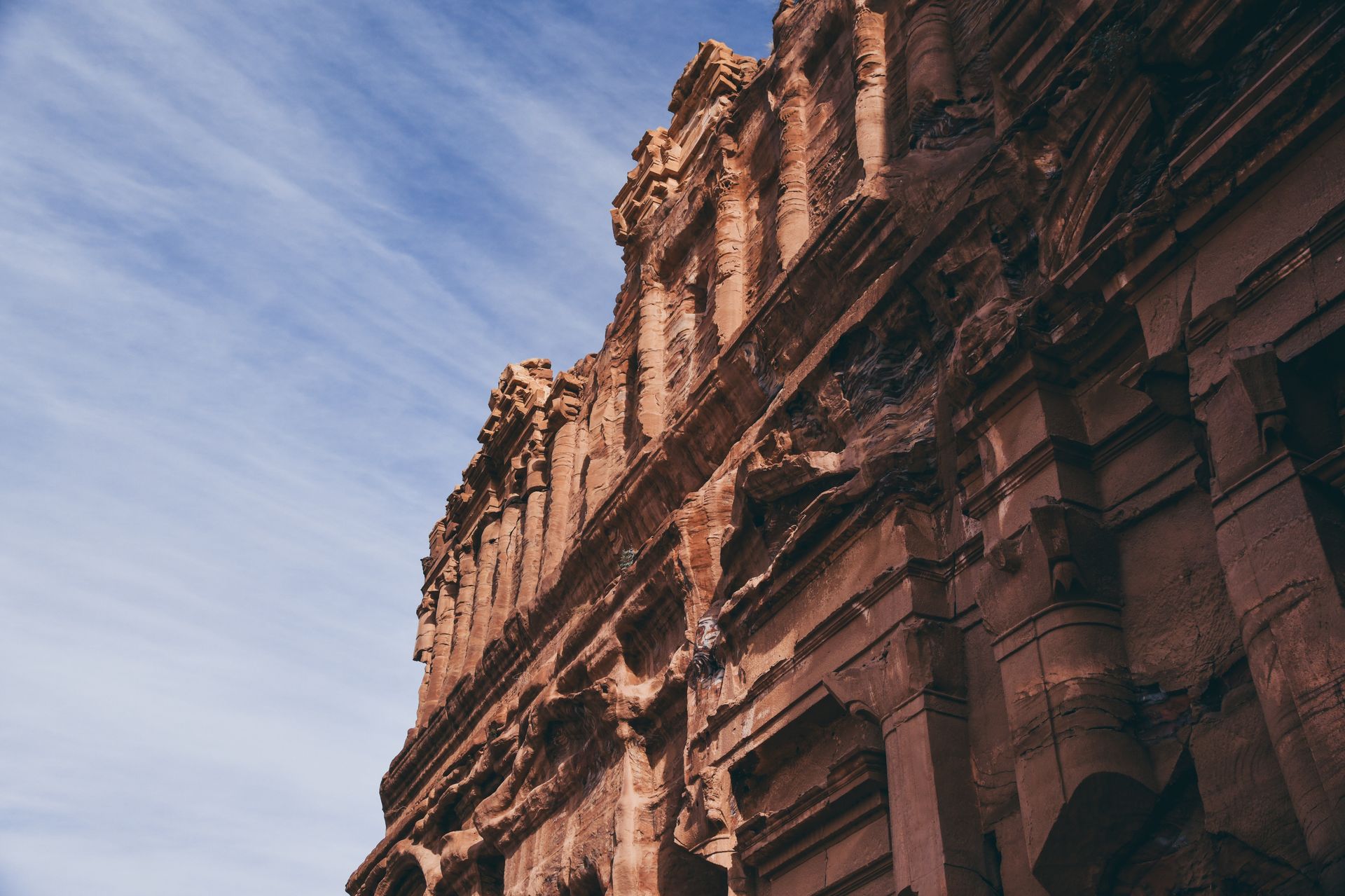
Across from the Theatre, another staircase leads to the Royal Tombs: the Urn Tomb, the Silk Tomb, the Corinthian Tomb, and the three-storey Palace Tomb. The light is best in the afternoon, but the crowds are thinnest now, so we usually do them here. If you only have time to look closely at one, make it the Urn Tomb with its big arched portico. Lonely Planet rates the Royal Tombs among the best carving in Petra, and a staircase beside them leads up to another high place.
Midday: eat and rest
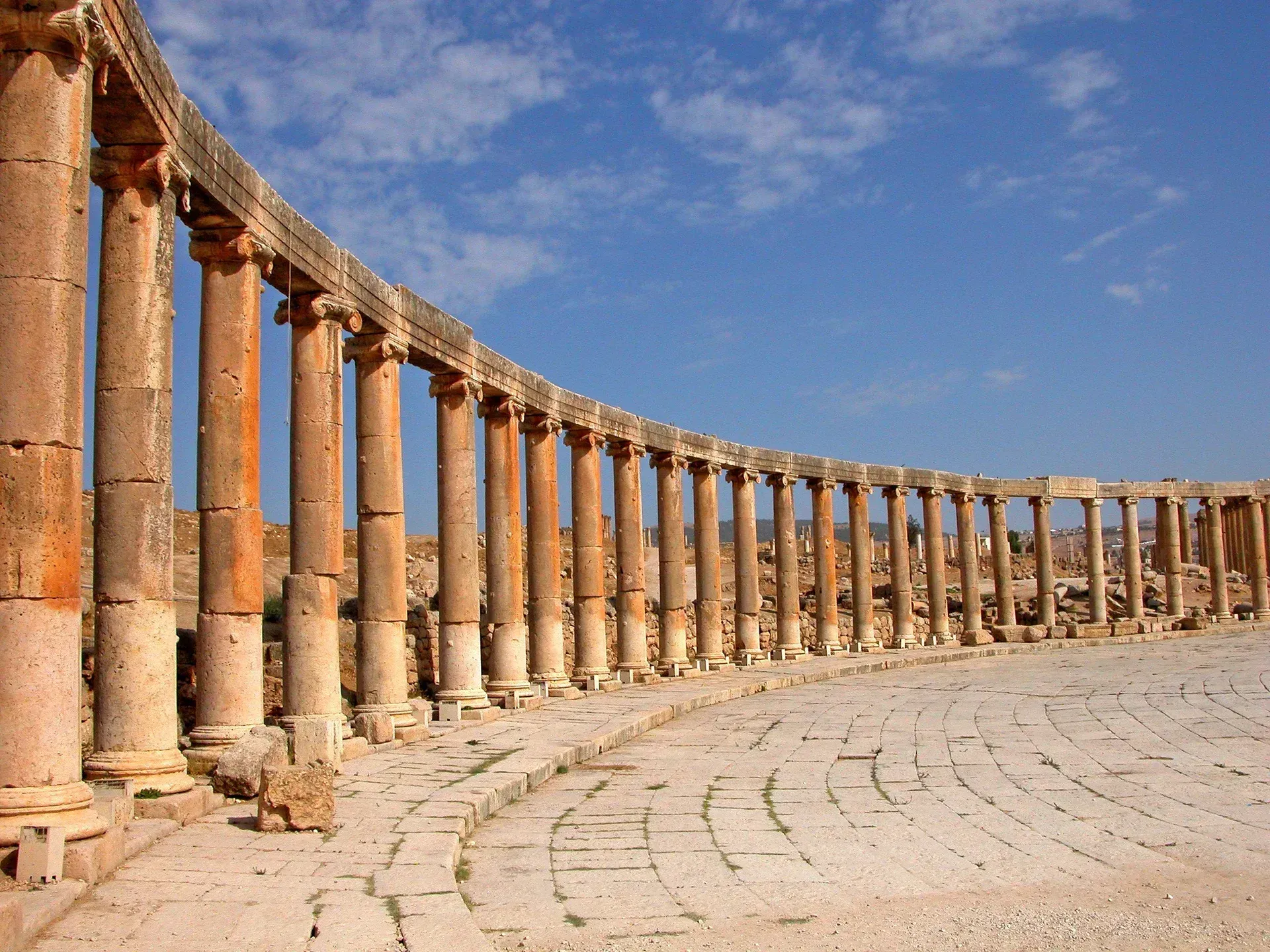
Continue along the colonnaded street to the Basin area. There are two restaurants and several stalls selling water, tea and snacks. Sit in the shade and drink some tea. The Monastery climb comes next, and you don't want to start it hungry.
The Basin Restaurant, at the end of the colonnaded street, is the only restaurant inside the site. It's a buffet run by the Crowne Plaza hotel, with salads, hummus, dips and grills, and it's pricey by local standards. It's also one of the few places that serves alcohol. The cheaper option is a packed lunch from your hotel, eaten on a high perch with a view. For tea, the Bedouin-run tea stalls near the Royal Tombs are well placed for sunset.
Early afternoon: the Monastery
This is the climb that decides how you feel about your day. It's roughly 800 steps, uneven in places, and takes most people 45 minutes to an hour. It's worth it. The Monastery is bigger than the Treasury and far quieter, and the viewpoints nearby look across Wadi Araba.
Go slowly, take breaks, and carry more water than you think you need.
Late afternoon: Royal Tombs at golden hour, or straight home
If you still have energy, return to the Royal Tombs when the sun is low and the rock turns warm orange. If you don't, take the main path back. Just remember the Siq has a gentle uphill slope on the way out, and it feels longer after eight hours on your feet.
Want company? Book a
guided main trail with Sami or a
guided Monastery hike.
If you have a second day
This is where Petra gets interesting. Most visitors never leave the main path, and that's where the crowds are.
- The back-door route to the Monastery. You walk in from Little Petra, along part of the Jordan Trail, and arrive at the Monastery from behind. If you start early you can have it to yourself. Signage is poor, so hire a guide: here's our
back entrance hike with a guide.
- Al-Kubtha viewpoint. A short climb with one of the best views of the Treasury from above.
- Wadi Farasa to the High Place of Sacrifice, if you skipped it on day one.
- Little Petra, a smaller Nabataean site a short drive north, much quieter.
- Petra by Night. An evening walk through the Siq to the Treasury lit by candles. It was relaunched in May 2025 with projection mapping and narration added. The official Visit Petra page now lists it Sunday to Thursday, starting at 8:30 pm and ending around 10:30 pm, at 30 JD per person, with children under 10 free. Older pages and guidebooks still say Monday, Wednesday and Thursday at 17 JD, so check at the Visitor Centre. A daytime ticket is not included. Our rule of thumb: worth it if you like a bit of ceremony and have a second night in Wadi Musa. Skip it if you've walked 20,000 steps and are done for the day.
What to skip, and a few honest warnings
Be careful with animal rides. The donkeys and horses on the Monastery path are tempting when you're tired. If you do ride, use the posted fare from the Visitor Centre, don't haggle it down, and look for an animal that looks healthy and well cared for. If you see mistreatment, report it to the tourist police at the Visitor Centre.
Skip the "ancient artefacts." Anything sold as an antique has likely been looted, and it's illegal to buy. Don't take rocks or sand either. Petra is already losing ground to footfall.
Don't climb on the monuments. Every year people carve their names into the rock and run their hands along the facades. Please don't.
Golf carts exist. If knees or time are a problem, PDTRA runs carts from the Visitor Centre toward the Treasury at 15 JD one way or 25 JD return. They don't go up the Monastery steps.
Don't try to see everything in one day. Petra covers about 264 square kilometres and has more than 800 registered sites. Pick a route and enjoy it.
What to bring
- Shoes with proper grip. The route includes over a thousand uneven steps, and trainers with thin soles will hurt.
- Water. Bring a refillable bottle and top it up at your hotel. Plastic bottles are carried in and rarely carried out.
- Hat, sunscreen, layers. There's very little shade, and mornings are cold even in spring.
- Cash in dinars for tea, snacks and tips.
Getting here
Petra is about 240 km and roughly three hours by road from Amman via the Desert Highway. The JETT bus runs between Amman and Wadi Musa. Drivers and day tours from Amman are an option too, but it makes for a long day, and we'd rather you stayed overnight.
From Wadi Musa you can walk or take a short taxi to the Visitor Centre.
See our
Petra day tour from Amman,
private transport, or the
Petra and Wadi Rum trip.
A note on current conditions
Governments have raised their travel advisories for Jordan in 2026, and it's worth reading yours before you book. We've written about what that means for Petra and the rest of the country in
Is Jordan safe to visit? The sites are open, and 2026 has been quieter than the busy-season numbers above suggest. Official figures reported by Jordan News put Petra at 281,123 visitors from January to July 2026, about 3.7% fewer than the same period in 2025, with foreign visitors down from roughly 212,000 to 172,000. That usually means more space on the path and easier hotel deals, but it's a snapshot, not a promise.
FAQ
How much does it cost to visit Petra?
For visitors who spend at least one night in Jordan, entry is 50 JD for one day, 55 JD for two and 60 JD for three. Children under 12 are free. Same-day visitors from another country pay around 90 JD.
How many days do you need in Petra?
One full day covers the highlights. Two days lets you do the Monastery and the High Place of Sacrifice without rushing. Three days is for hikers and people who want the quieter routes.
What is the best time of day to visit Petra?
Early. The site opens around 6:00 am, and the first hour is cool and quiet. Late afternoon is the second-best option, especially at the Royal Tombs.
Is the Jordan Pass worth it?
For most independent travellers staying three nights or more, yes, mainly because it waives the visa fee and covers Petra. It makes less sense if your tour already includes entry.
Can you see Petra in half a day?
You can see the Siq, the Treasury and the Street of Facades in a few hours. You won't see the Monastery as well, and you'll be walking fast. If time is short, go early and stop at the Theatre.
Plan your visit with us
We run guided days in Petra, back-door hikes, and multi-day trips that include Wadi Rum. If you'd like a local to plan it with you, message us on WhatsApp and tell us how many days you have and how much walking you want to do. Or
see our tours.
Last updated: 29 October 2026. Prices and hours change, so confirm on the day.